
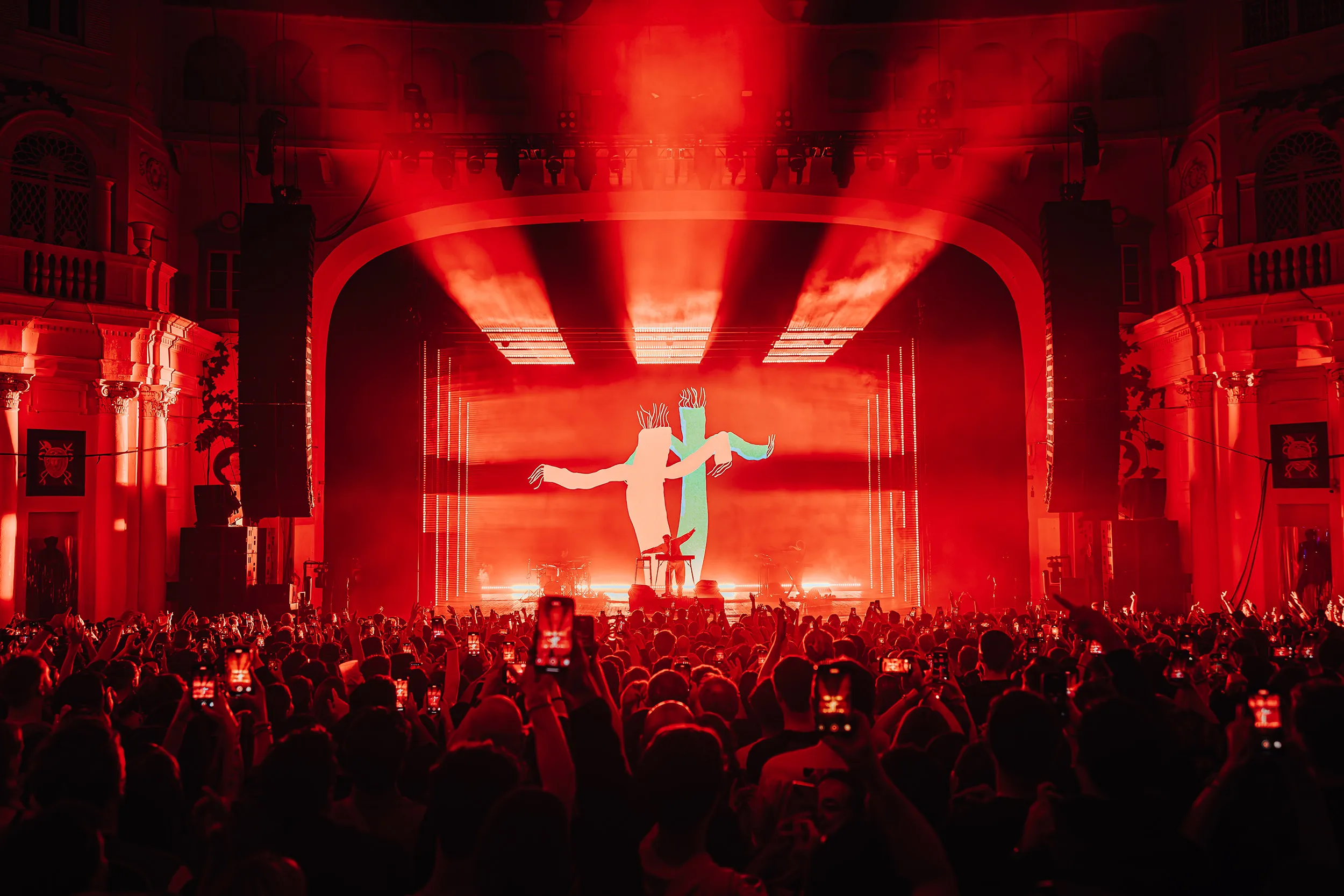
Barry Can't Swim
From a debut album at the Roundhouse to a festival field at All Points East – growing a live show with Barry Can't Swim.
the mission
Our goal was simple yet ambitious: create a show that captured Barry Can't Swim's energy, artistry, and authenticity – transforming his performance into an experience that felt as alive as his music. By understanding his creative identity and the importance of performance, we set out to design a production that celebrated musicality, connection, and imagination in equal measure.
the beginning
One of the hardest steps an artist takes comes in the build-up to their first sold-out academy shows. Years of developing a sound and a performance on a tight budget, and then, suddenly, an enormous stage to fill and an expectation to level up.
The creative team grows. The budgets grow. A feeling of vertigo isn't uncommon. We've been through this with multiple artists, and we've learned that supporting someone at this point in their career is as much a holistic job as a creative one.
We first started working with Barry Can't Swim in March 2024, supporting the campaign for his debut album at The Roundhouse. His growth over the following months was meteoric, and by November, we were collaborating with the team to deliver a brand-new show across three sold-out nights at Brixton Academy.
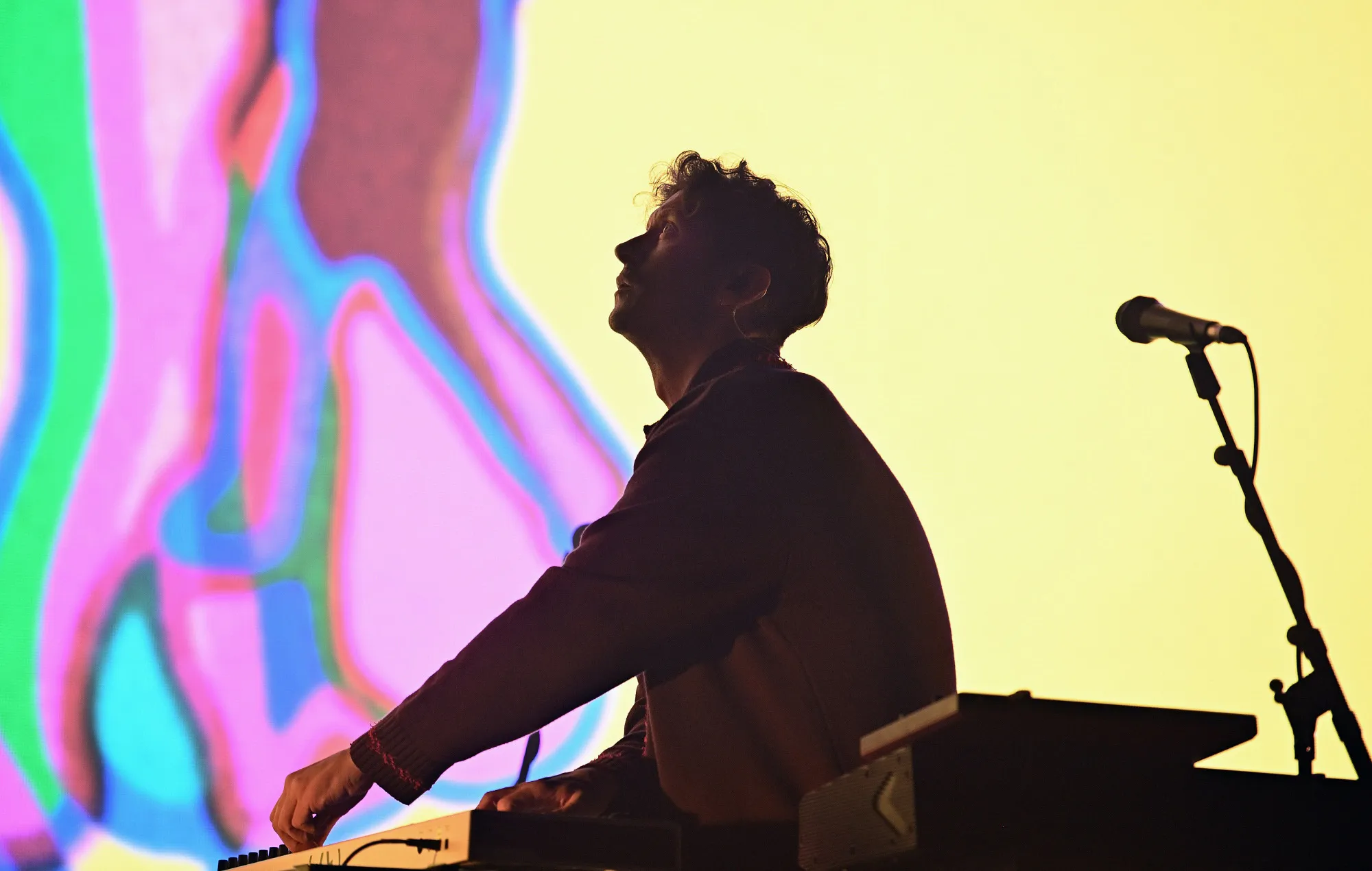
An artist's visual language evolves constantly, often reinventing itself multiple times throughout their career. The Brixton Academy shows marked one of these defining moments for Barry Can't Swim, as the stage became a space to reflect his growth, energy, and musical identity. With a bigger stage and heightened audience expectations, we knew this was a moment to level up – and we did.
Sometimes the minimal ideas are the ones that strike gold.
After spending time with Barry Can't Swim and diving into his artistic identity, it became clear how important the act of performance is to his identity, and demonstrating his musicality would be the most genuine way of presenting him on stage. Our design needed to showcase this while keeping the show a lived experience for the audience, not just something to be watched.
Our research took us down many divergent paths, but one thing became clear quickly: treating it as an electronic music show felt like a square peg in a round hole. We wanted the energy and togetherness of a rave, with the virtuosity and joy of watching a live band. That pulled us towards theatre – and the way a theatrical production can change the shape of a stage and shift where the audience thinks they are.
Our first sketches were elaborate – the stage as a living room that slowly came alive through the show, with lighting and screens concealed in the set so the audience felt the effect without ever seeing the source.
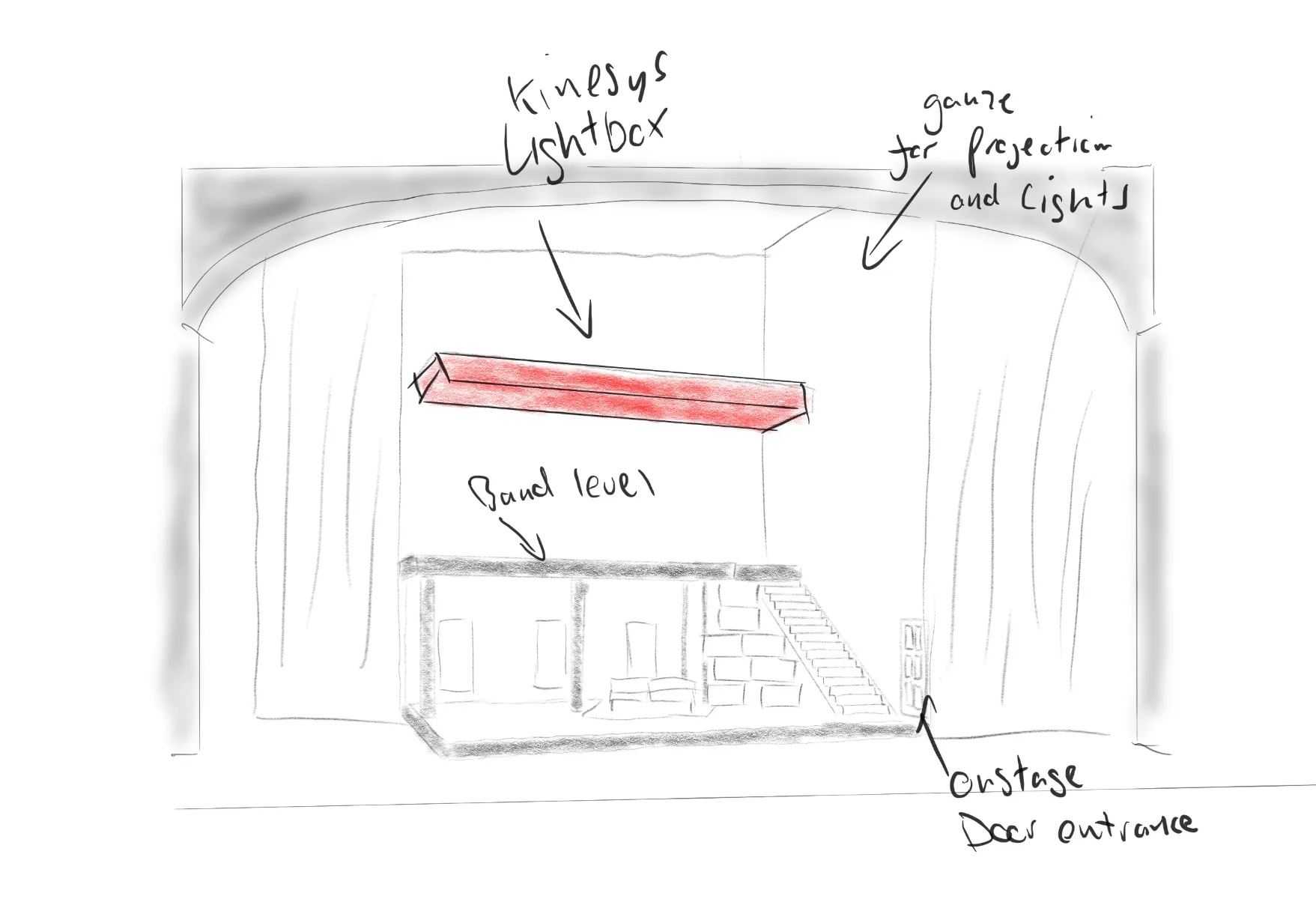
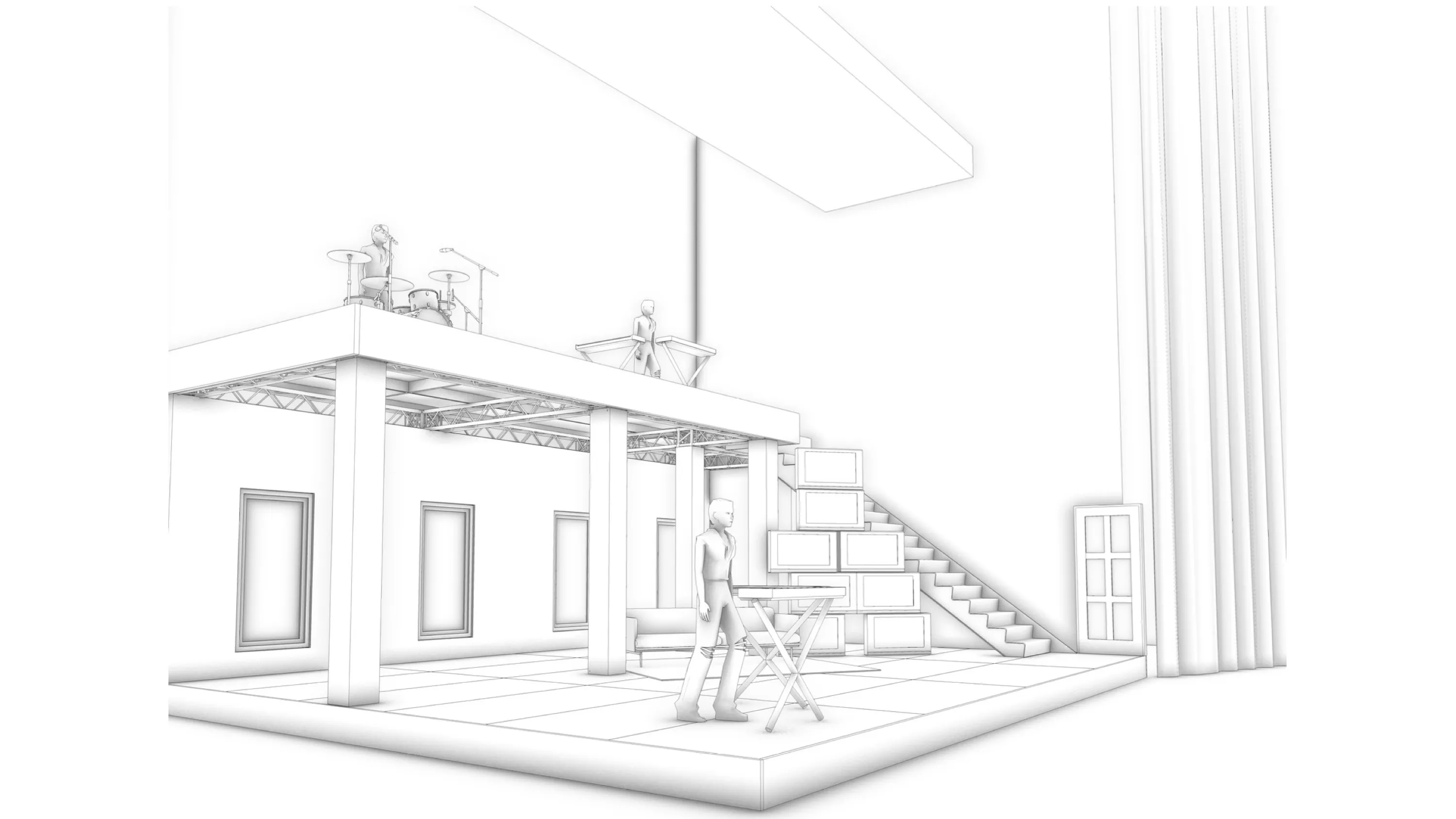
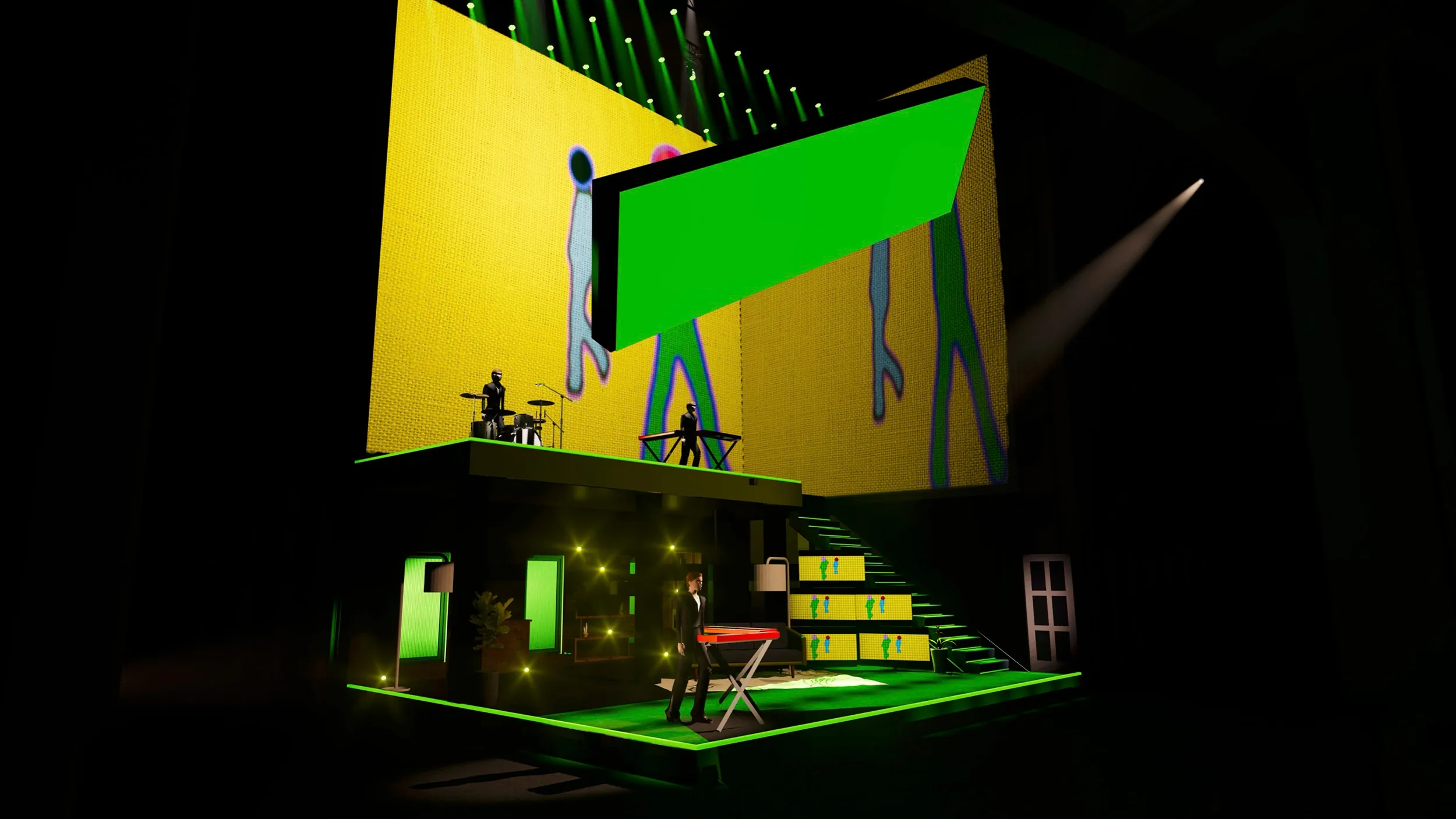
Then we did what we often do during a design process: asked what would happen if we rebelled against the idea we'd just created. Sometimes you have to make a rule to break a rule.
What would happen if we removed everything from the stage altogether, but still kept the theatrical thinking underneath?
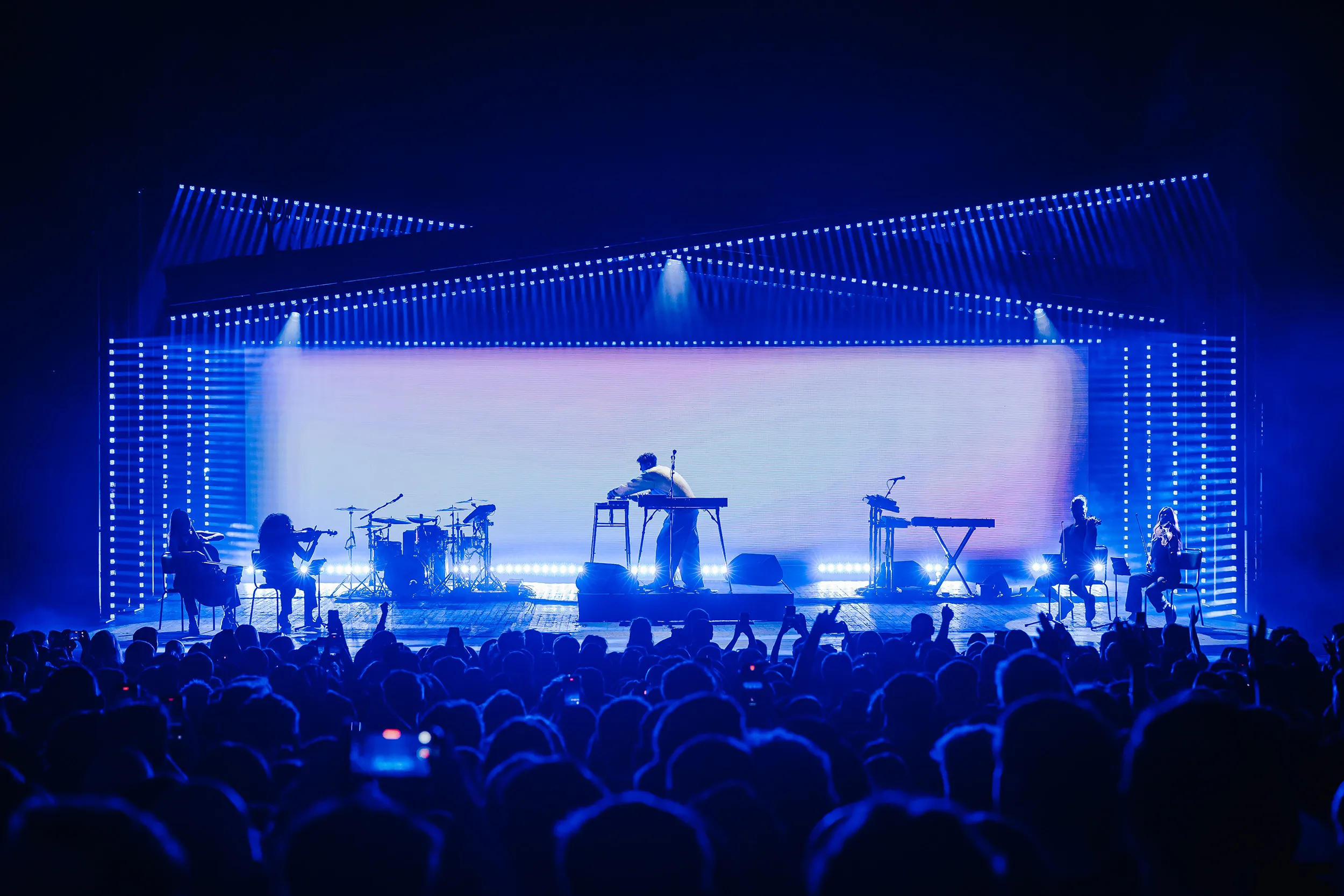
We landed on a box. A deceptively simple concept, with maximum flexibility. A space that could transform entirely with the performance.
the process
Our creative philosophy is a twofold approach. Firstly – throwing as much paint on the wall as we can, to see which paths are worth following. Secondly – scraping away large quantities of it until we're left with something that can tell a story without indulging in itself.
We give each department room to collaborate, and equal room to go off and explore on their own. You need both. The magic usually lives somewhere in between.
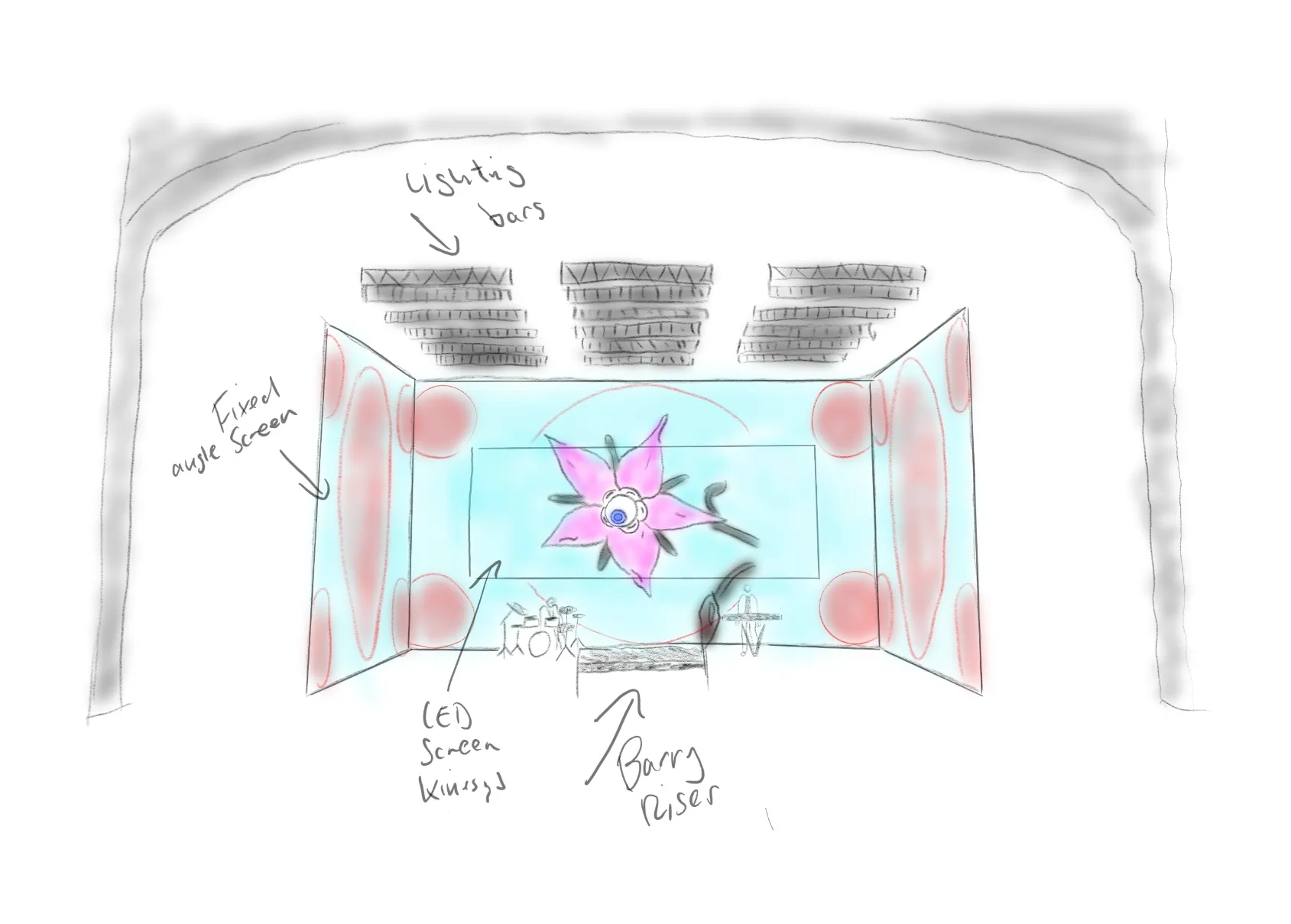
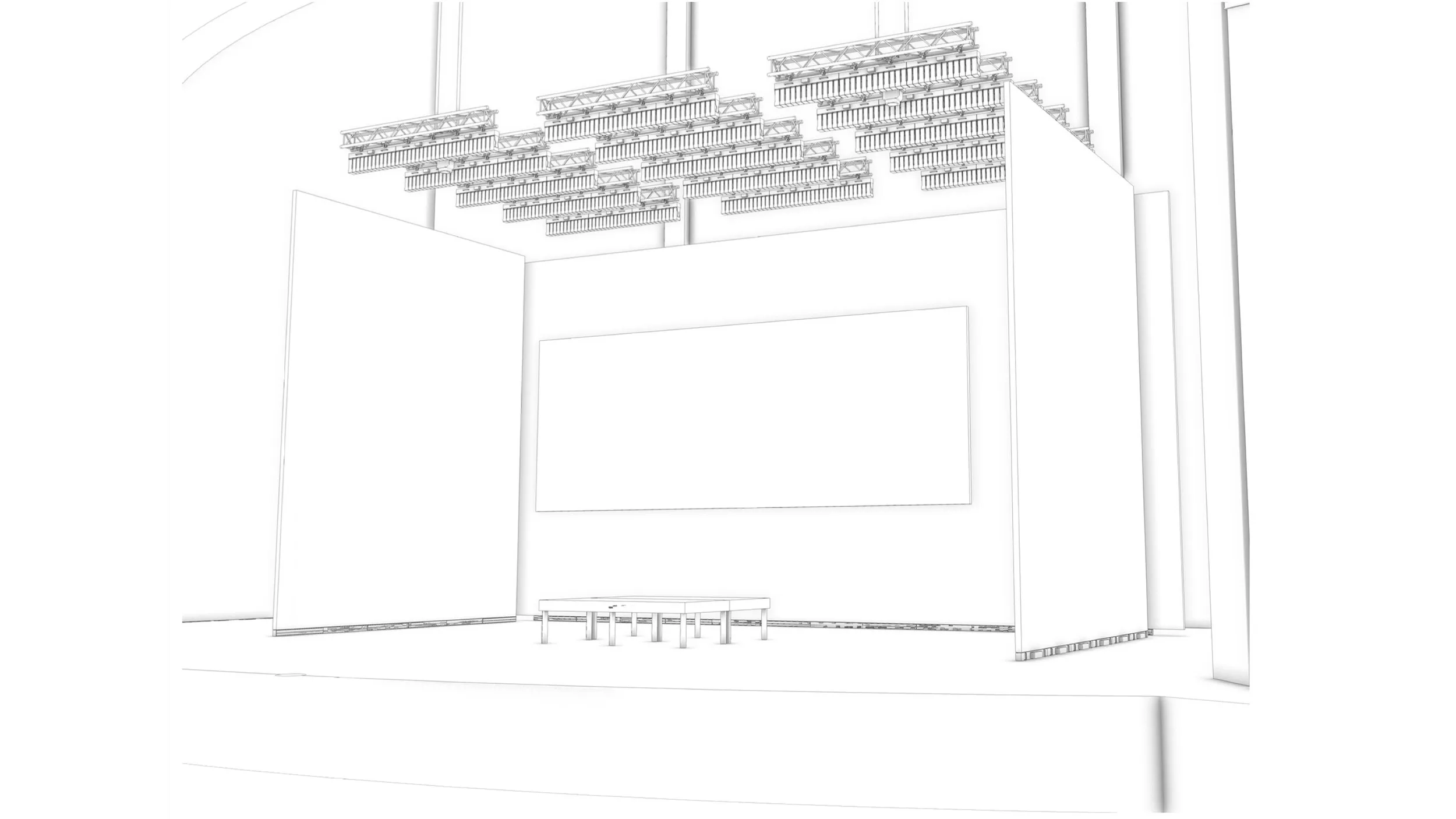
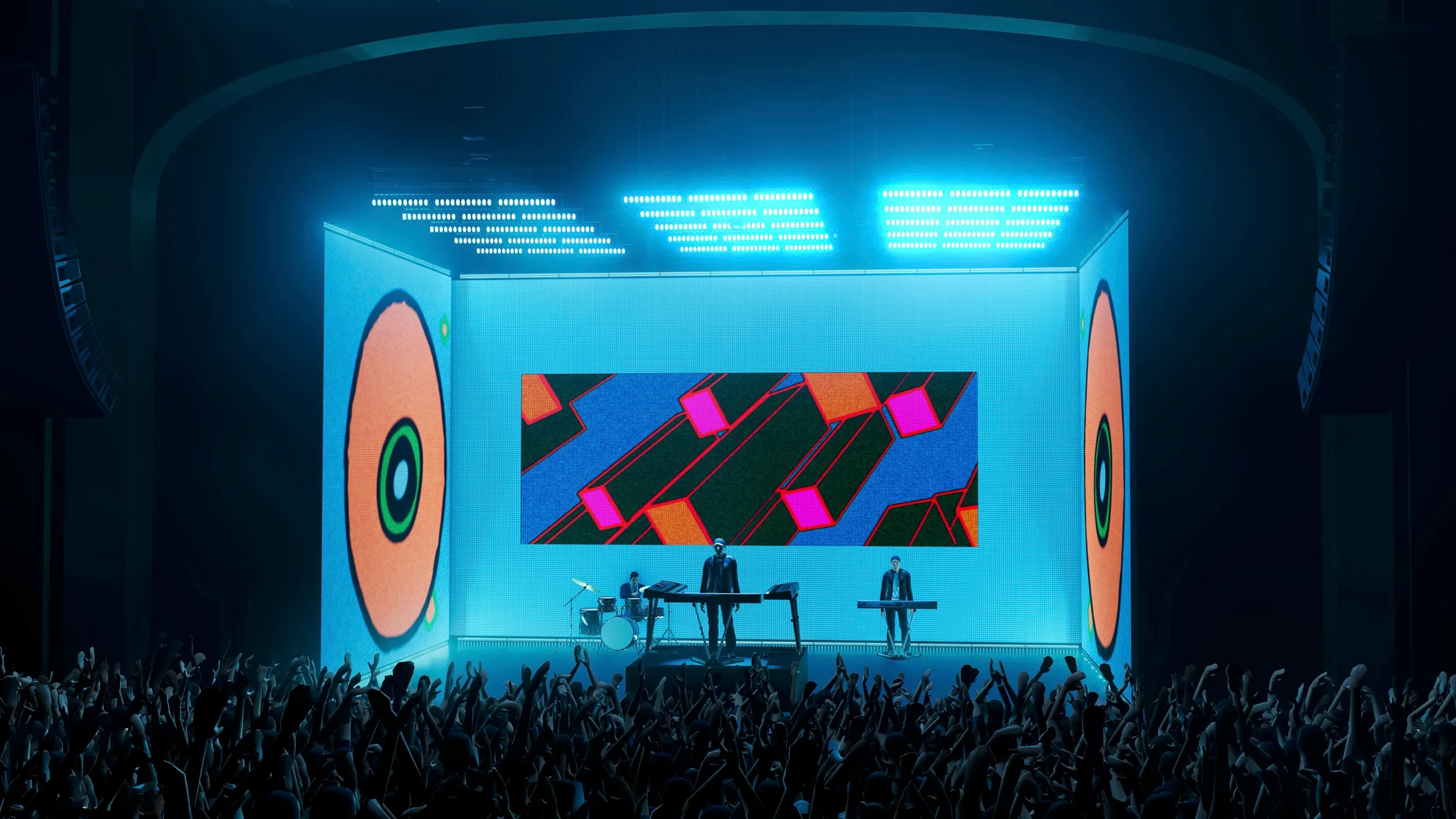
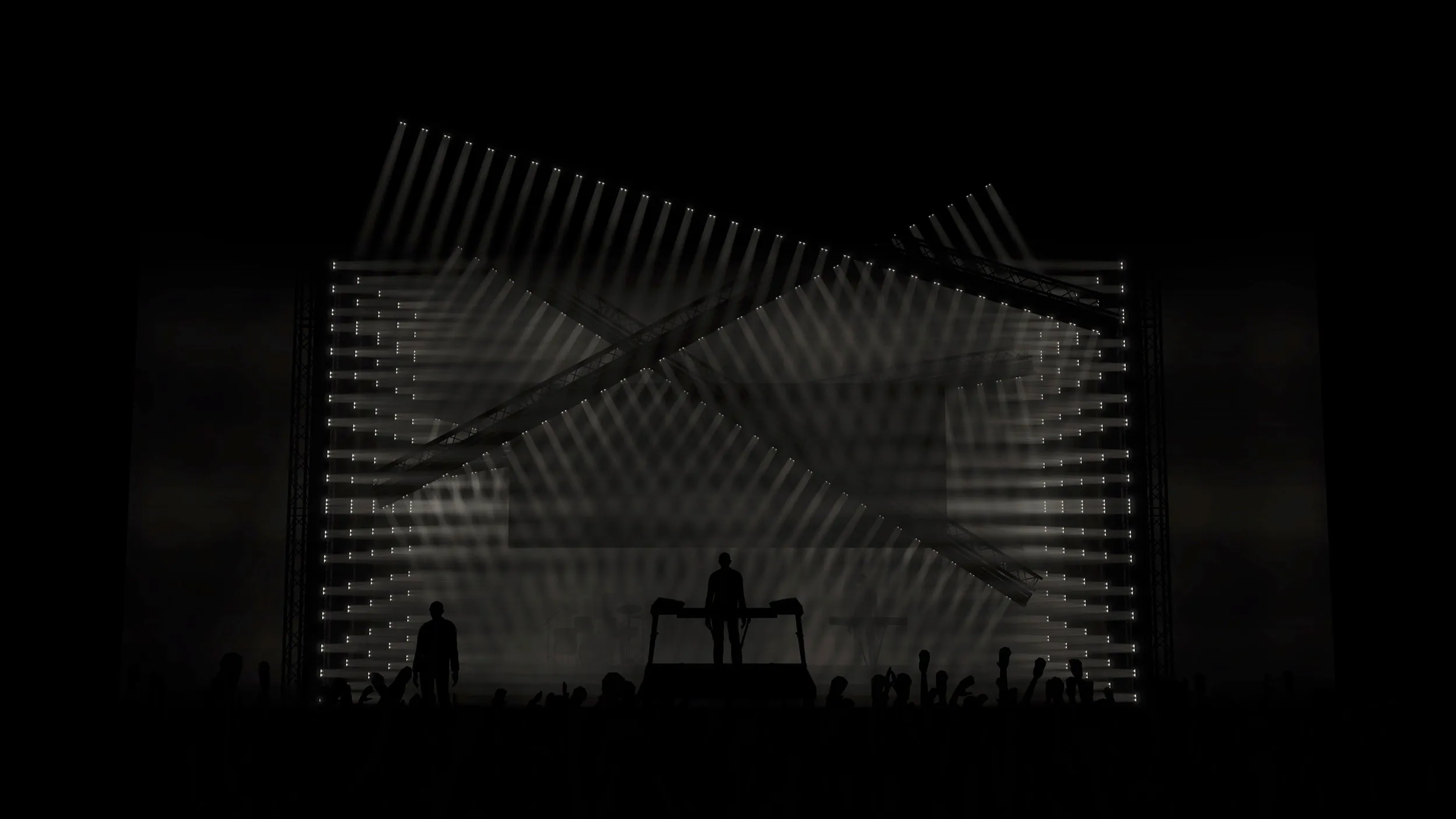
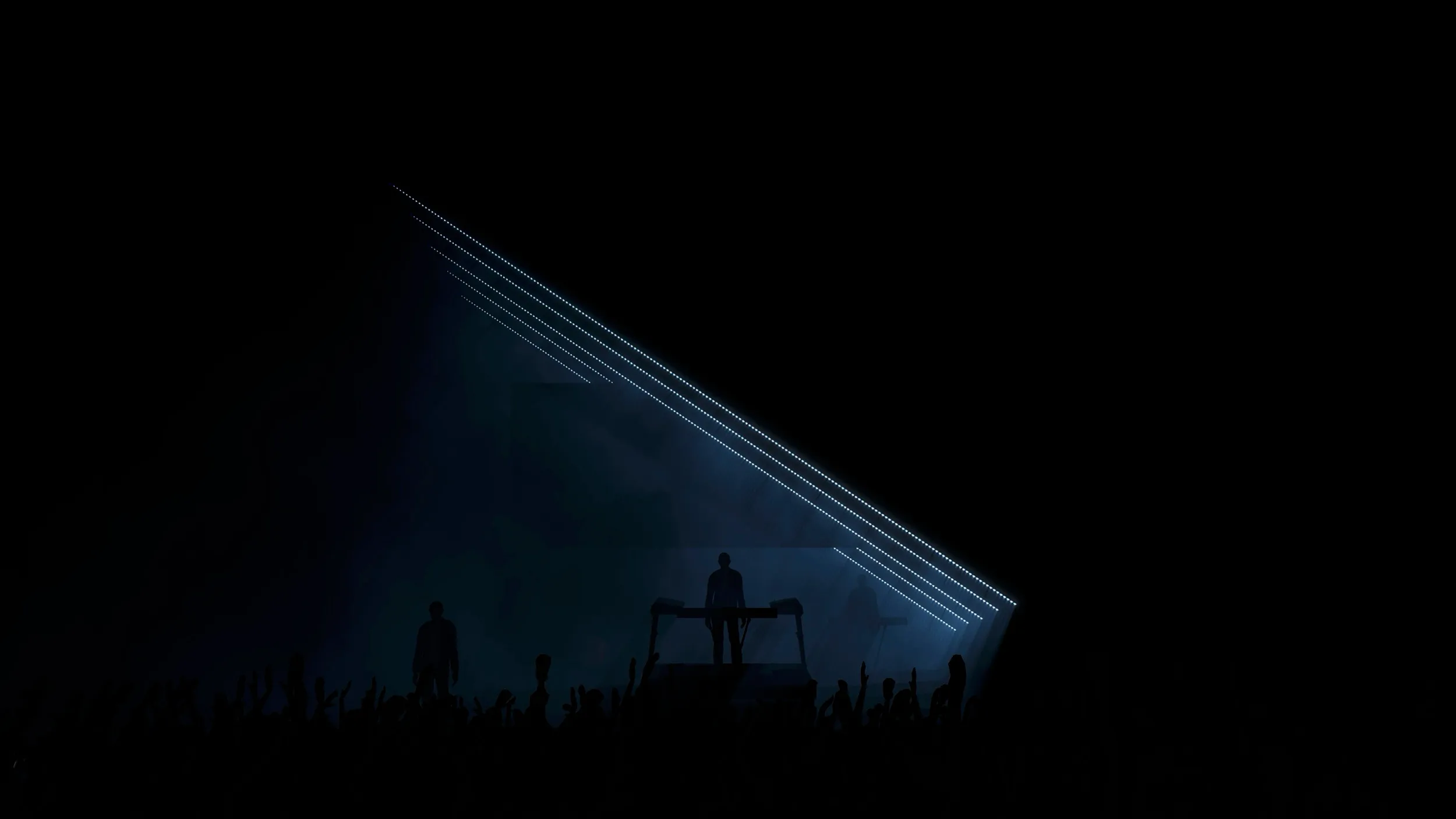
Kinetic, bold, and high-energy.
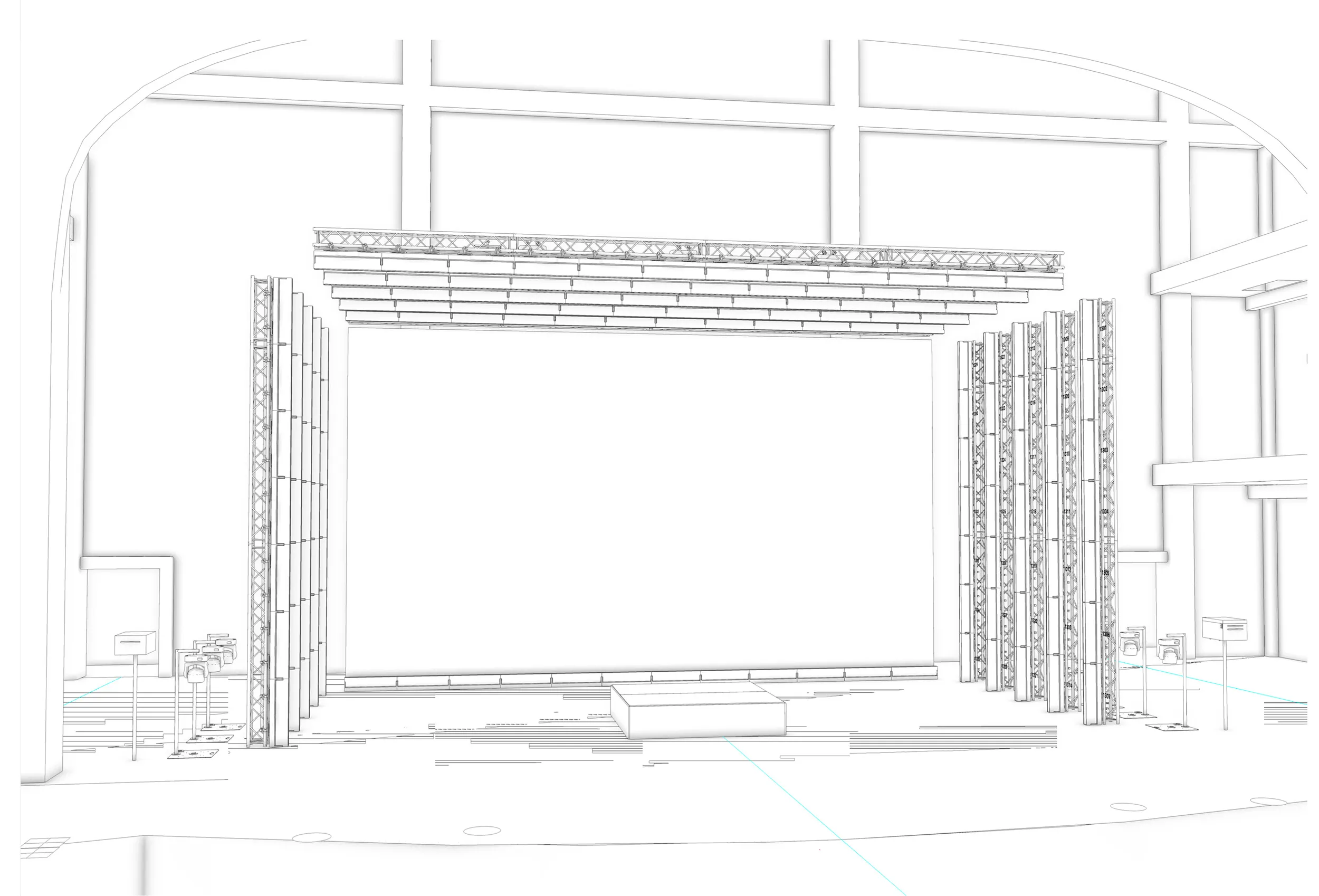
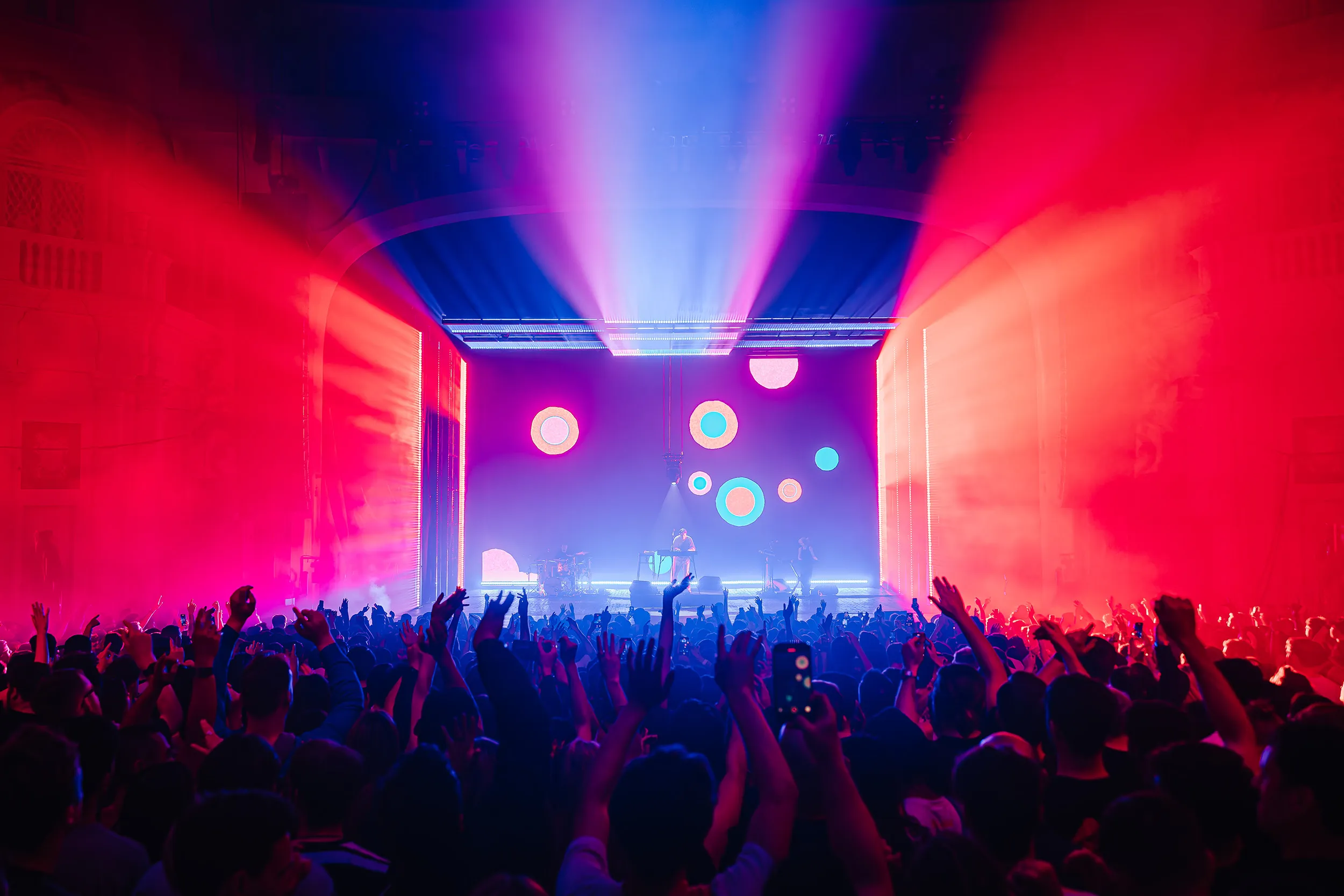
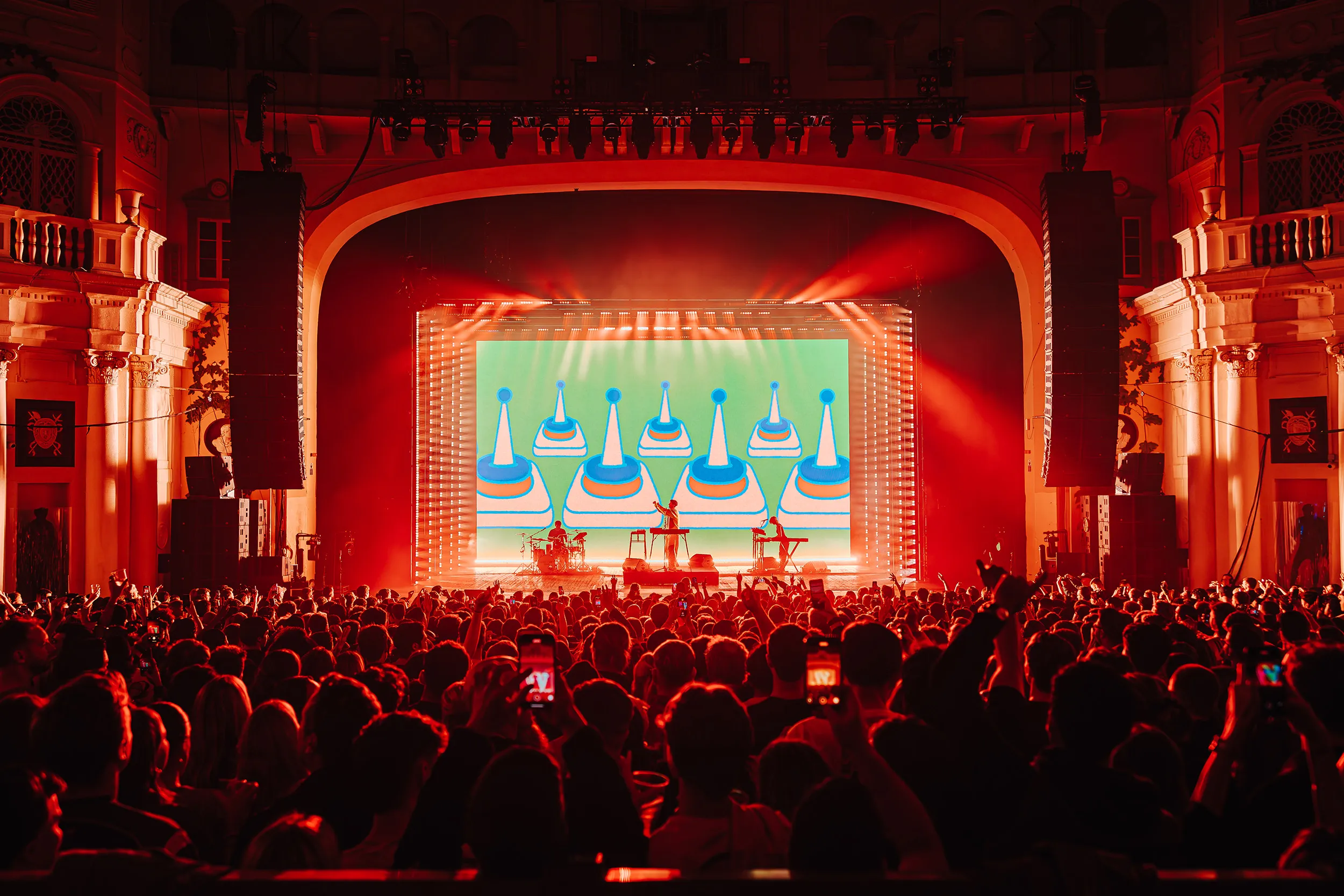
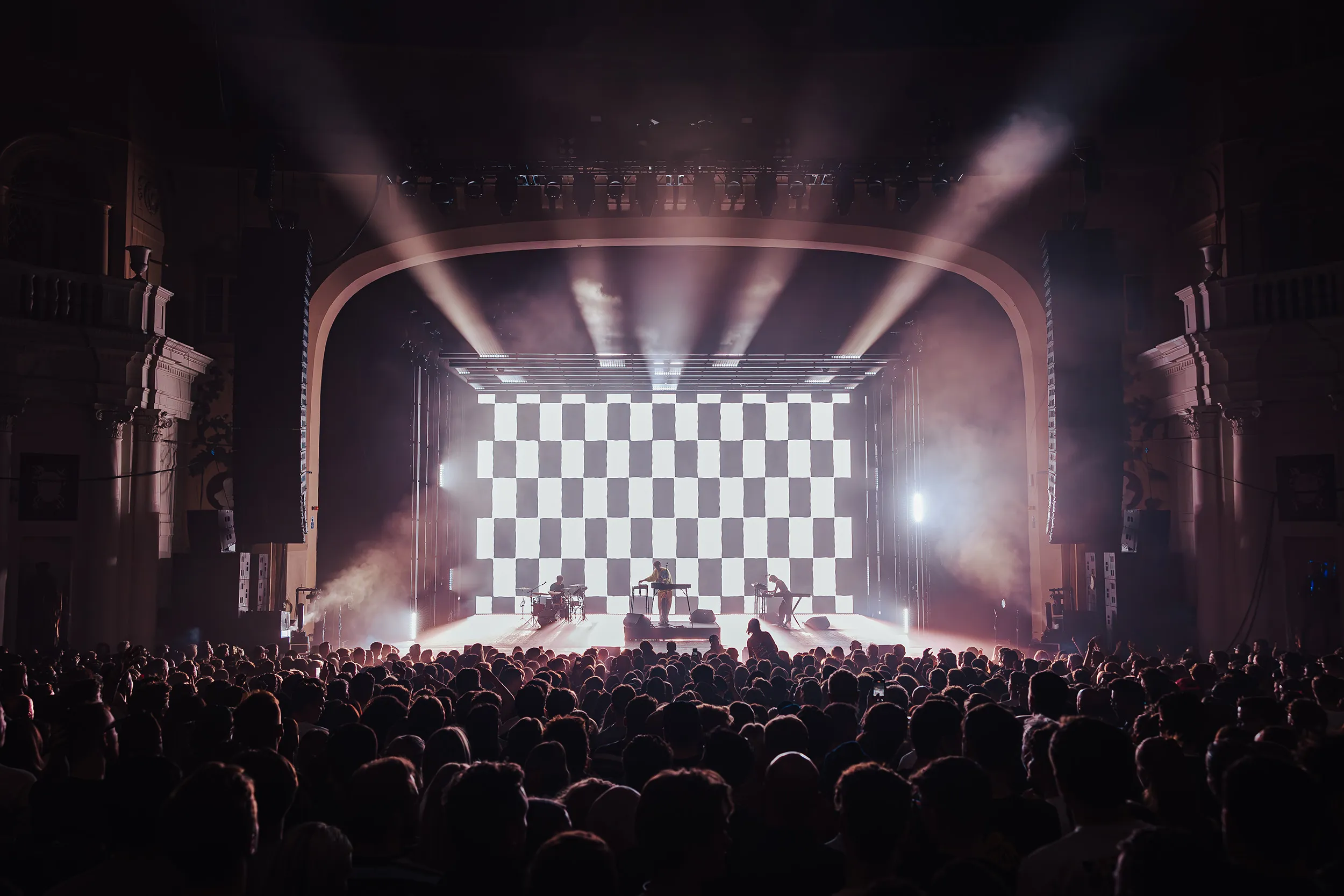
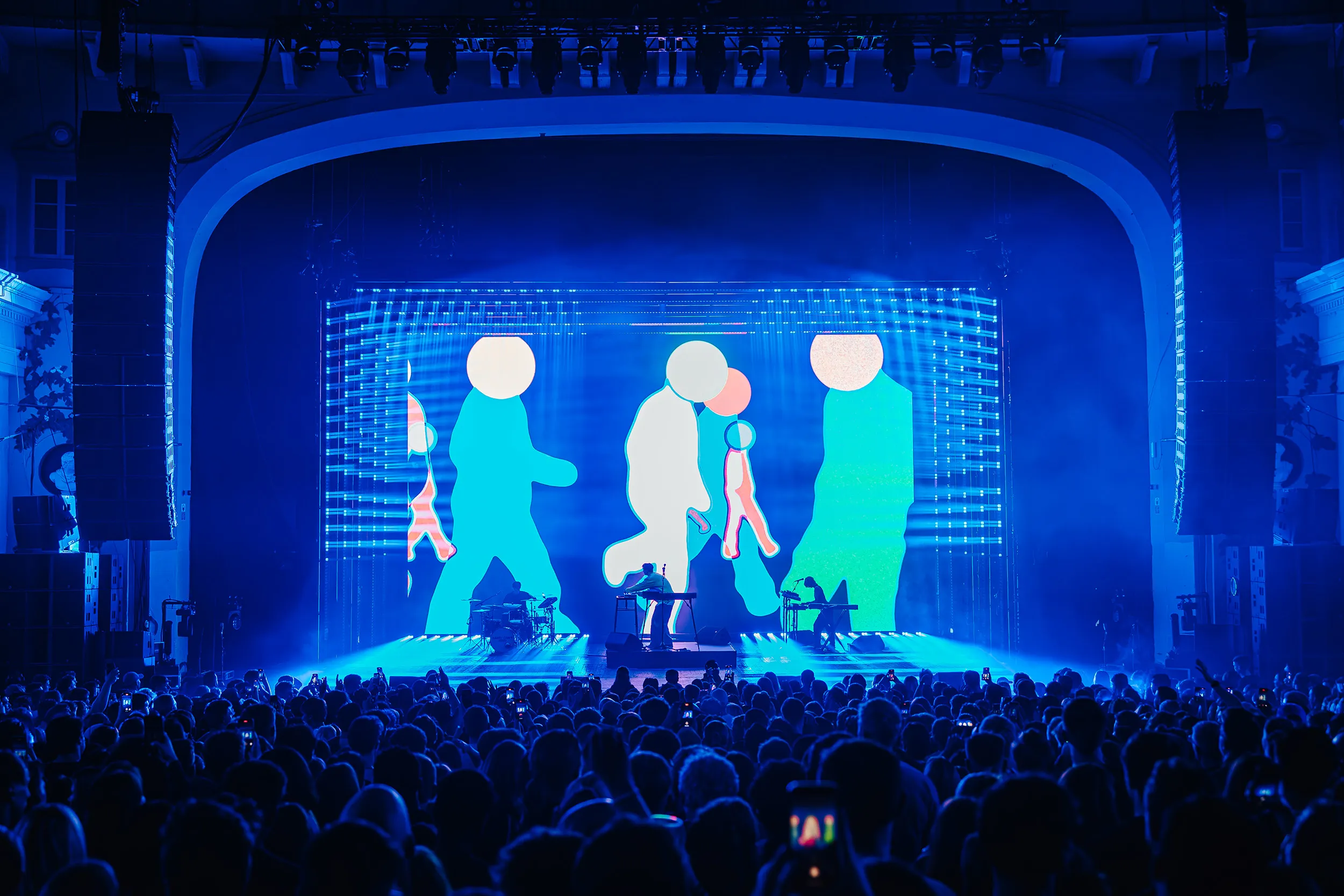
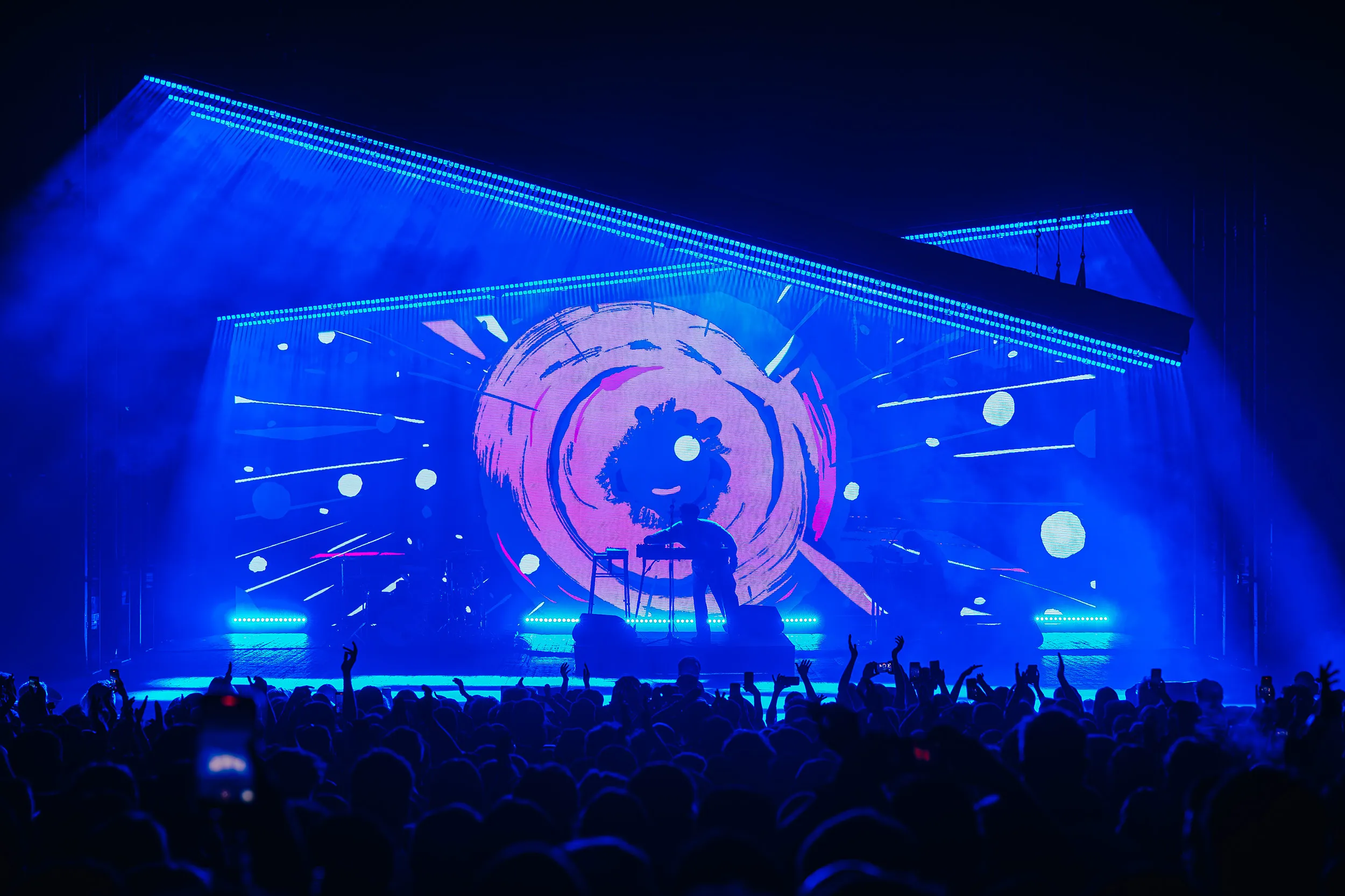
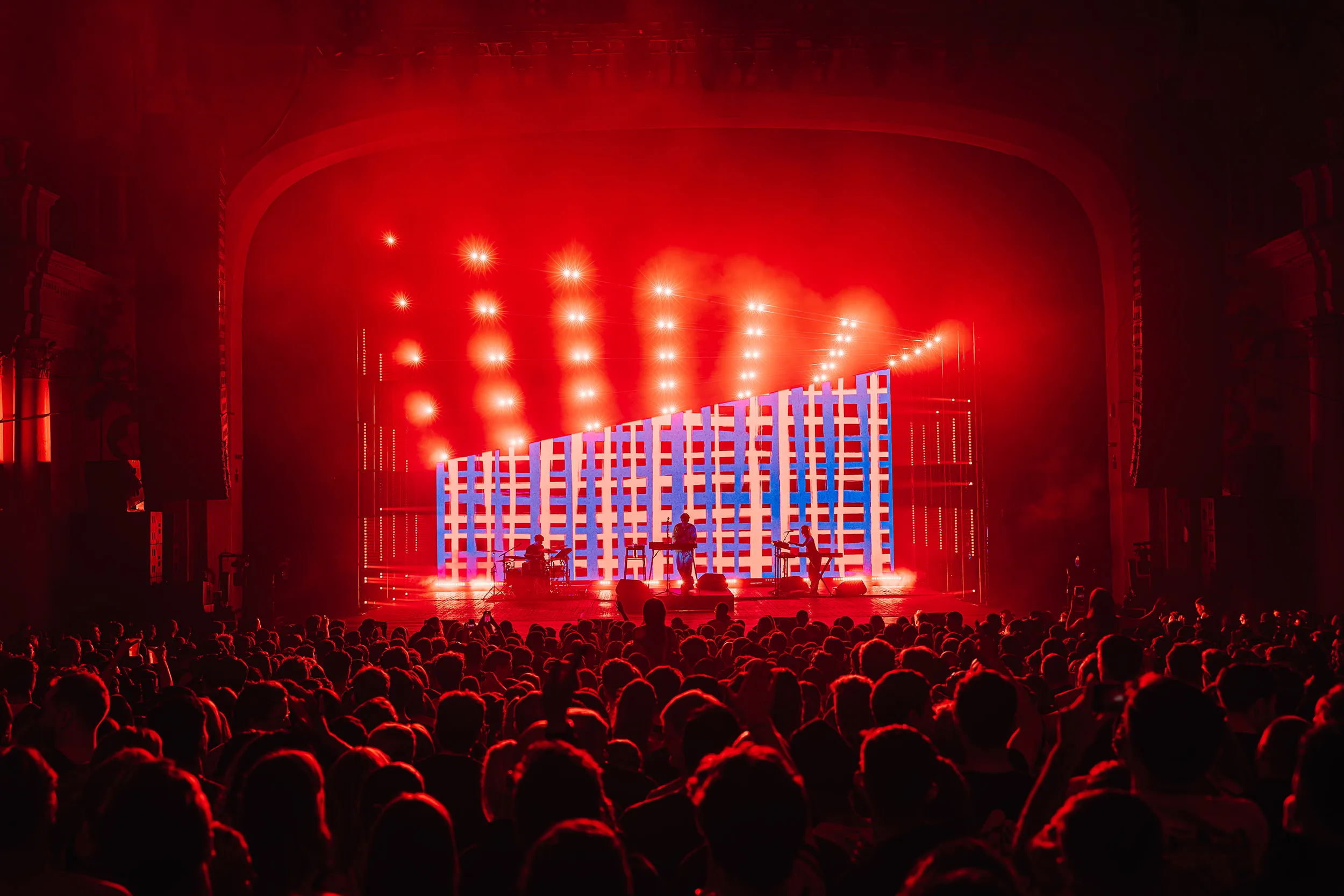
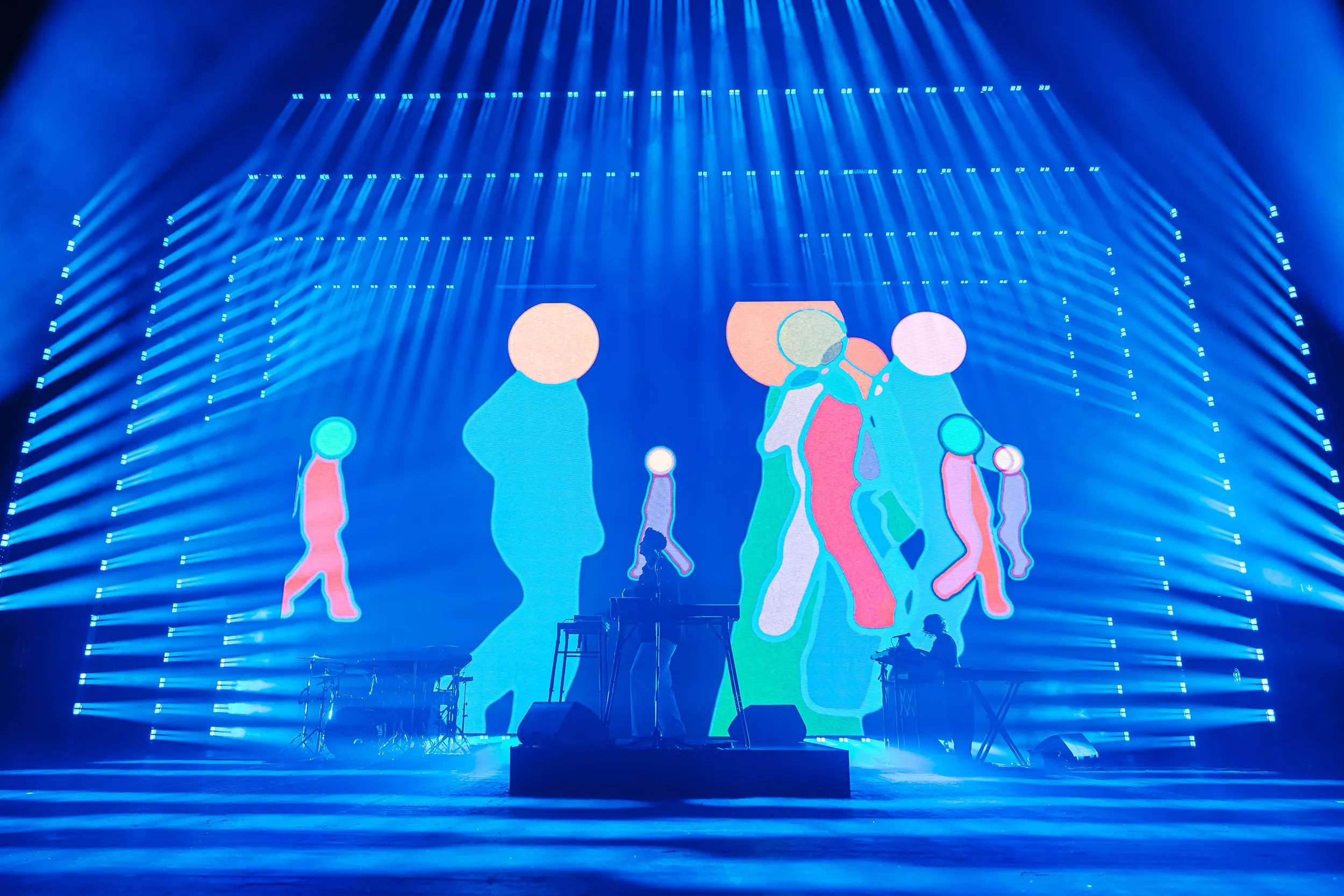
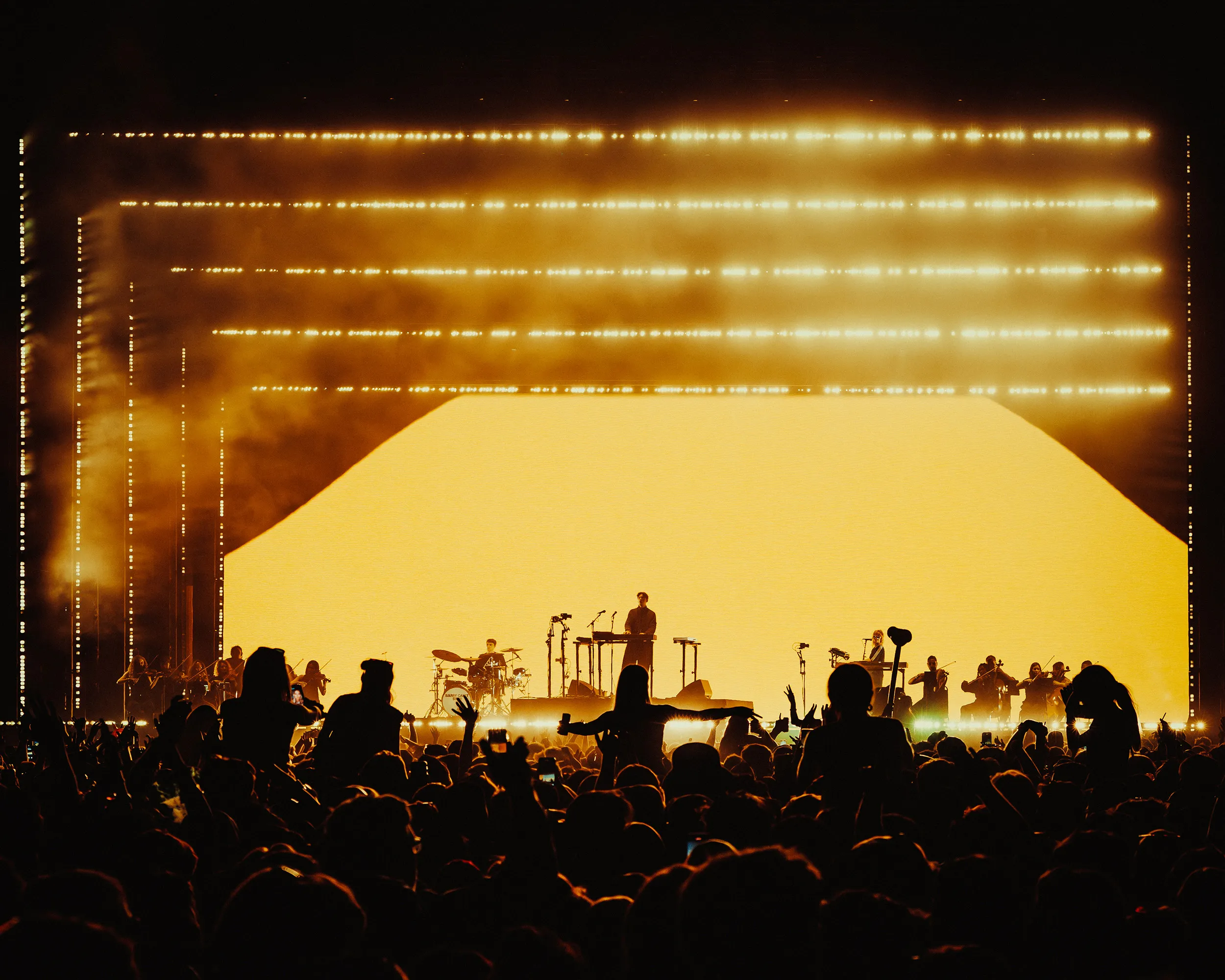
Visuals had already become a key element in the language of the show, and we wanted to take this further. The rear of our 'simple box' became a vast LED screen – as big as we could fit in the venue – while the same lighting fixtures were used on the walls and overhead to really unify the space.
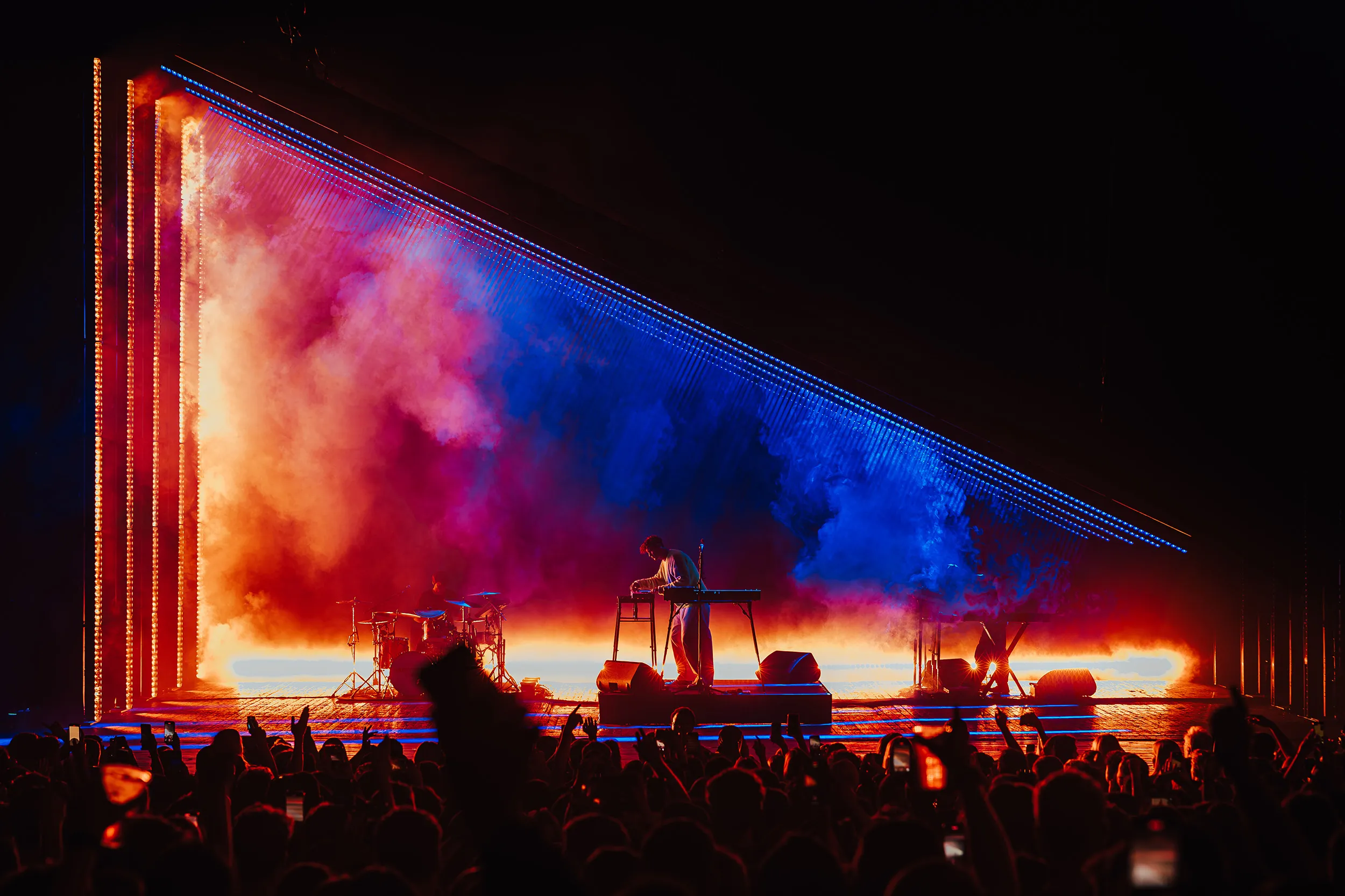
We wanted the production itself to feel kinetic and alive, matching the energy of Barry Can't Swim and the musicians on stage. This way we could transform the stage entirely – creating smaller moments of intimacy during softer tracks, alongside vast expansions of space and scale during the high-energy moments.
To achieve this, we designed the overhead lighting trusses to be rigged so that they could move individually during the performance. This gave us the freedom to dramatically change the stage, allowing us to script a physical narrative for the performance.
We also added some spotlights that would be lowered and raised individually on winches. Where the moving trusses added this kinetic feeling of scale, these spotlights would move in a way that felt smaller and more delicate and would help highlight Barry Can't Swim in certain moments of the show.
The result was a reimagined stage – a space within a space – that could transform with the performance.
the visuals
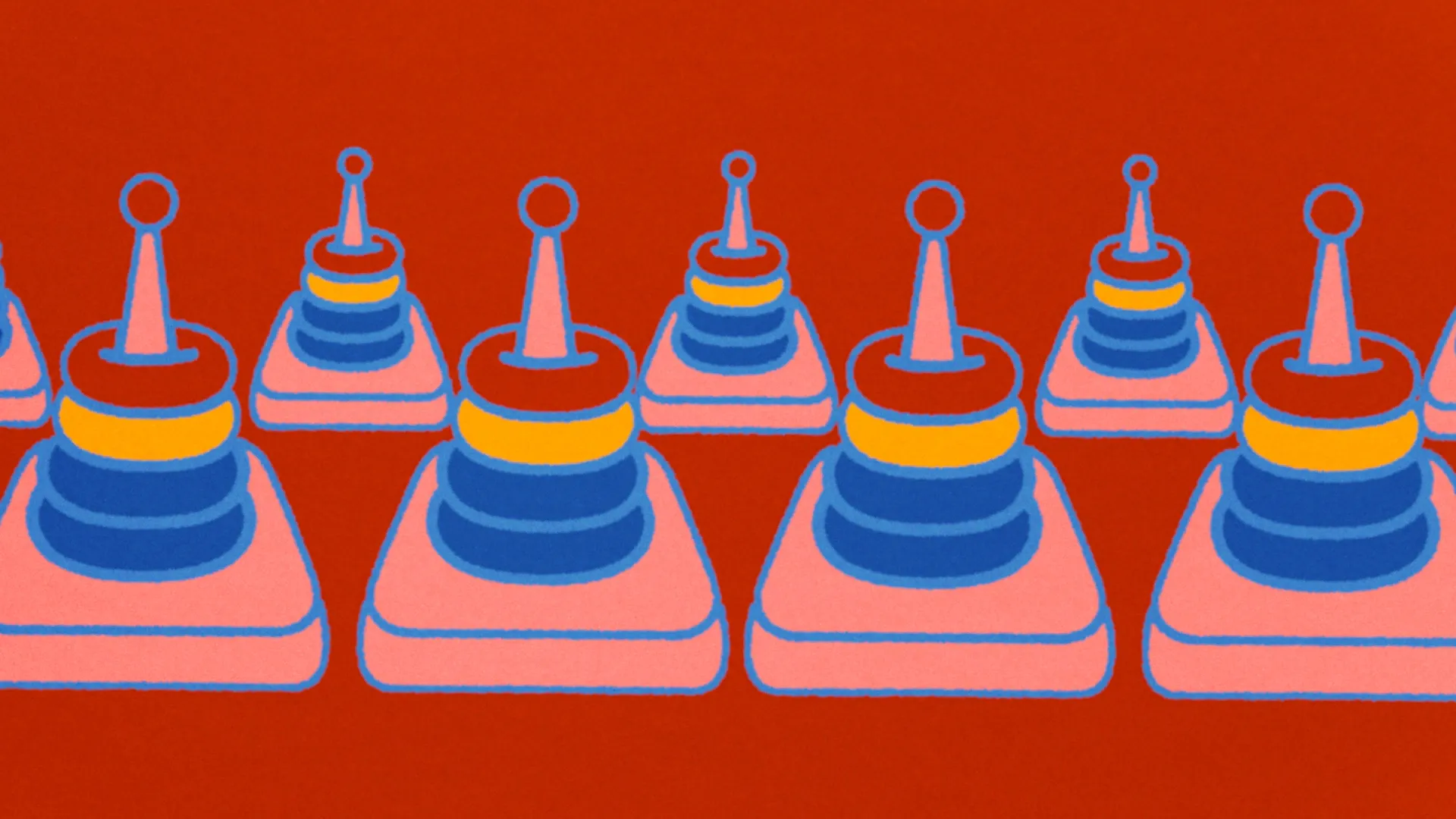
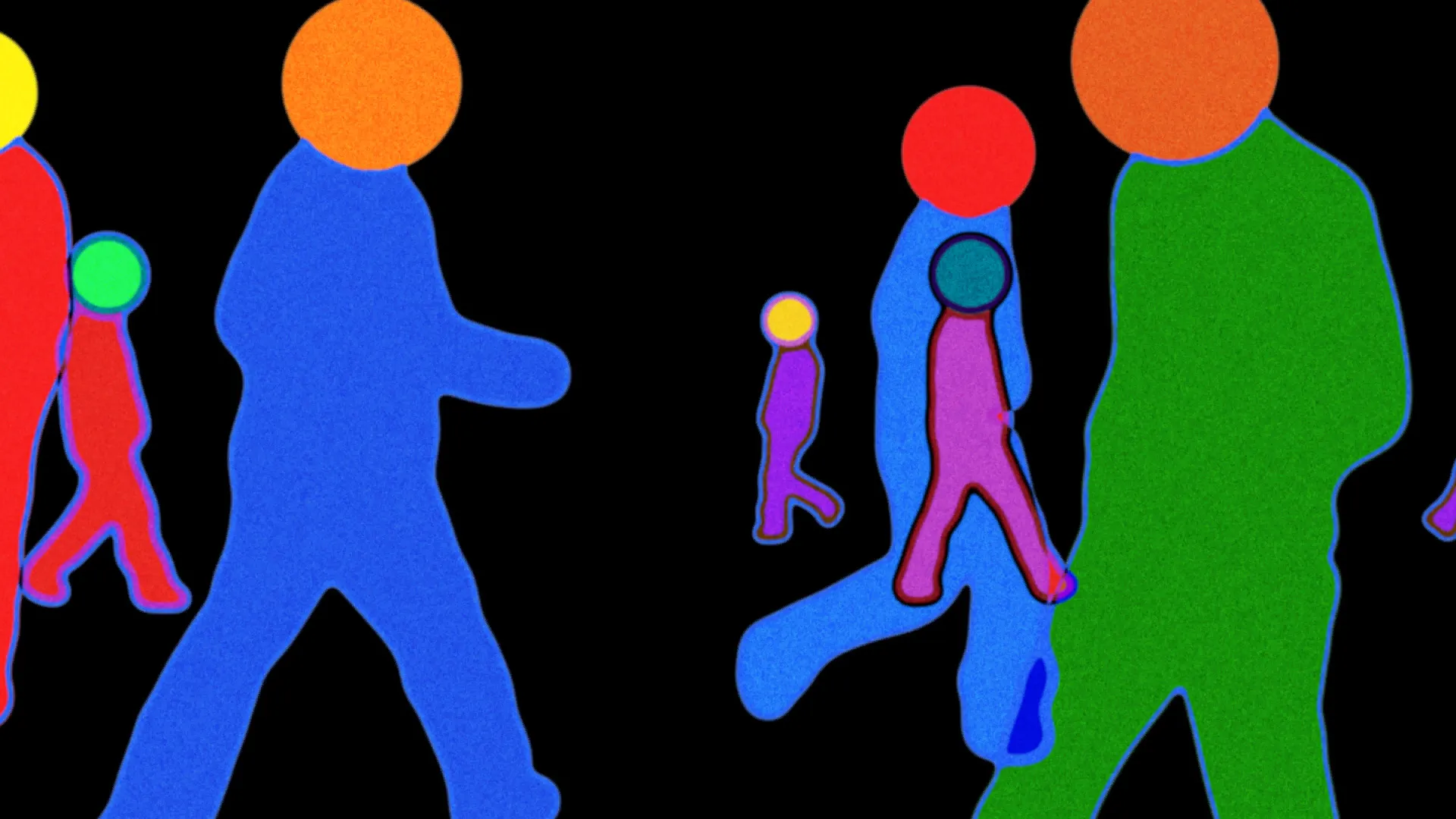
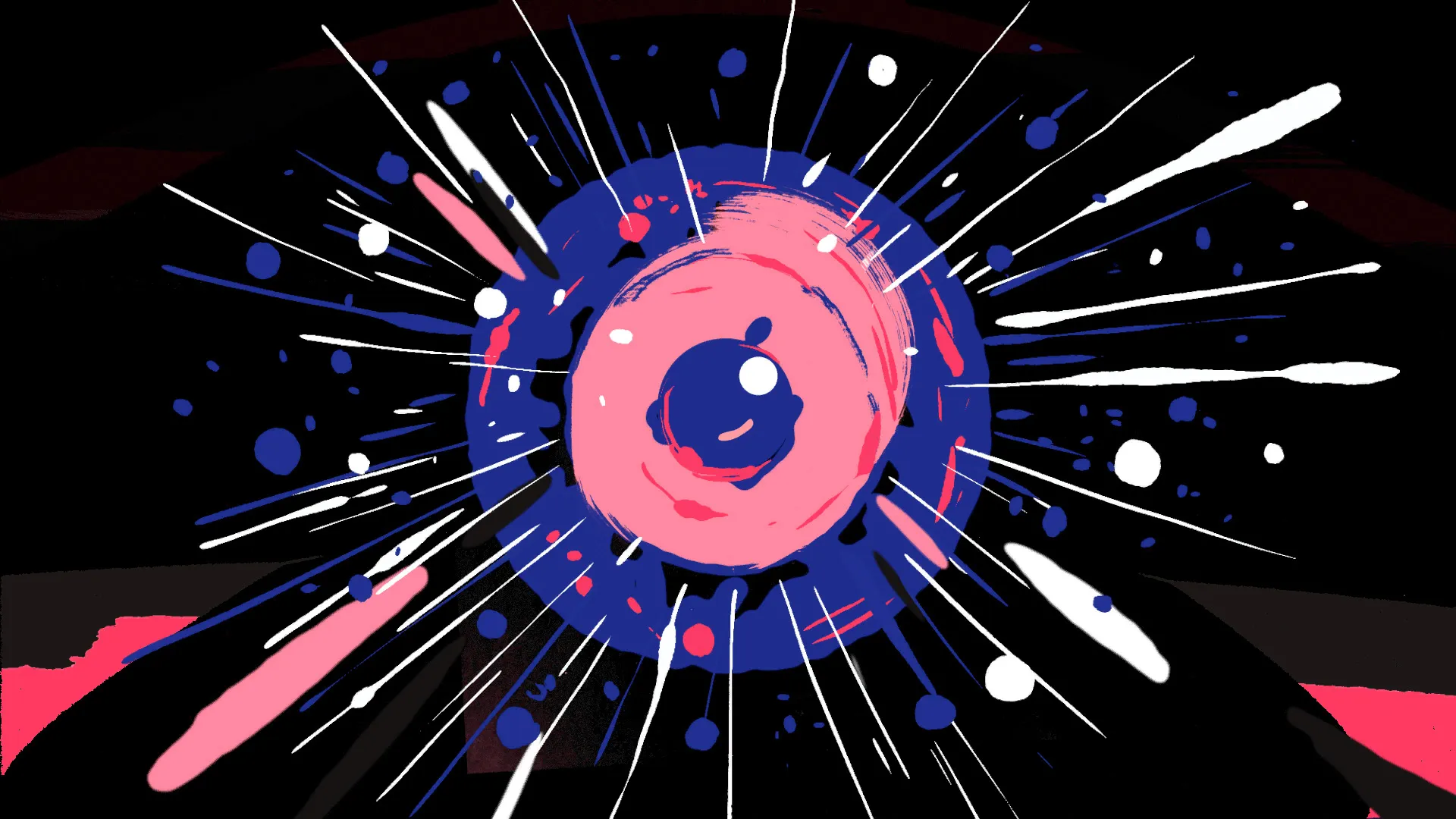
The hand-animated style gave the show a distinctive look, and once we committed to it, it mattered that we stayed in that world the whole way through. Half the challenge of a show like this is keeping the audience inside the world you've built – it's easy to get jolted back to reality, and once the scene is set, any change in visual style feels uncomfortable.
That brought its own problem. The style is bold by nature, which makes fine detail difficult, and the scale and brightness of the LED only push it further. And however beautiful the visuals were, they couldn't dominate the stage – the focus had to stay on the musicians and their connection to the production.
Sometimes the answer was to treat the screen as another light, albeit a very large one, with elements on screen standing in for individual sounds – a lineage that runs through a lot of Michel Gondry's work, like his video for the Chemical Brothers' Star Guitar. Other times we used it more simply, highlighting the band or the stage design with block colours and gradients that tied the screen into everything else around it.

programming
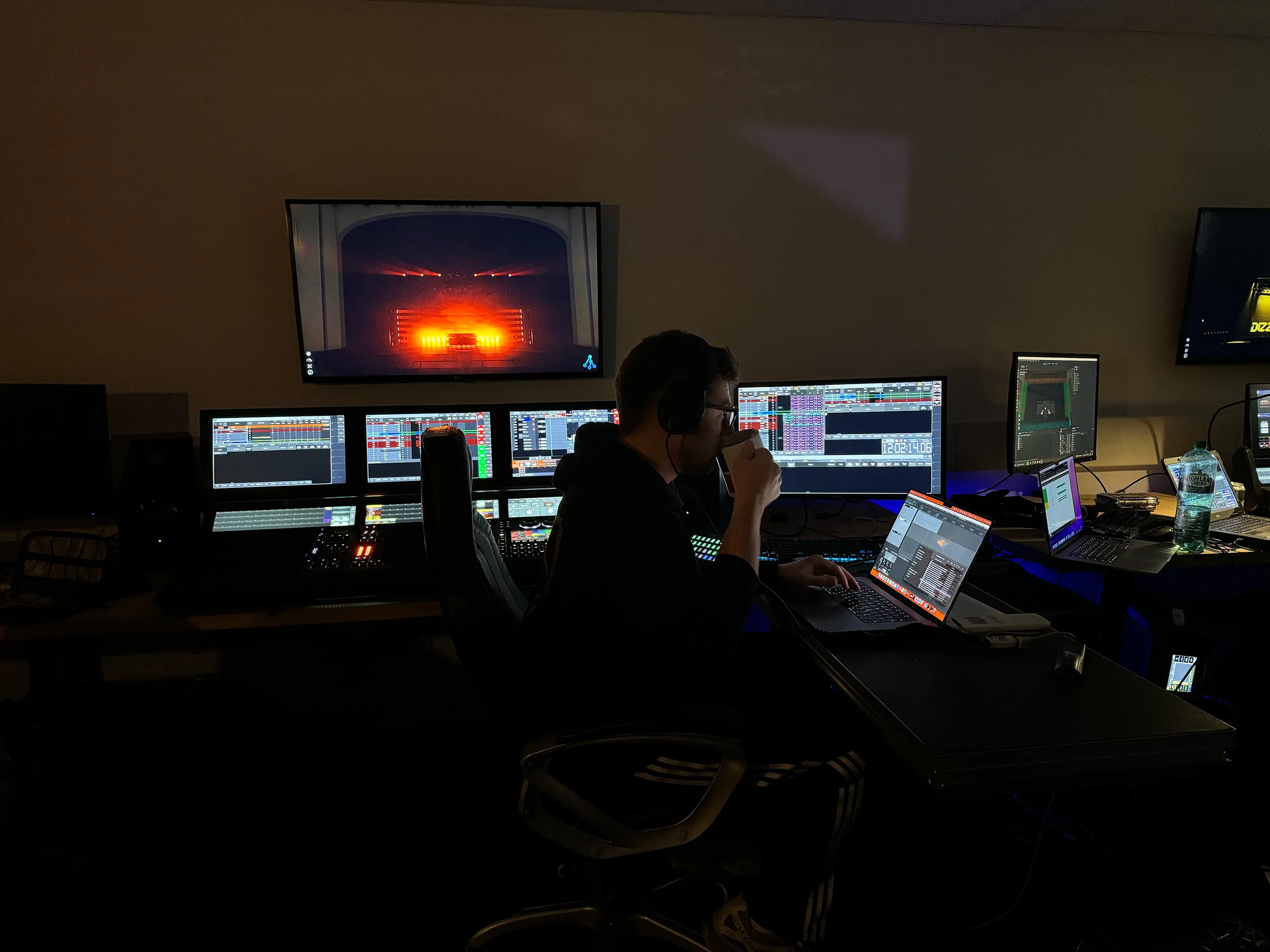
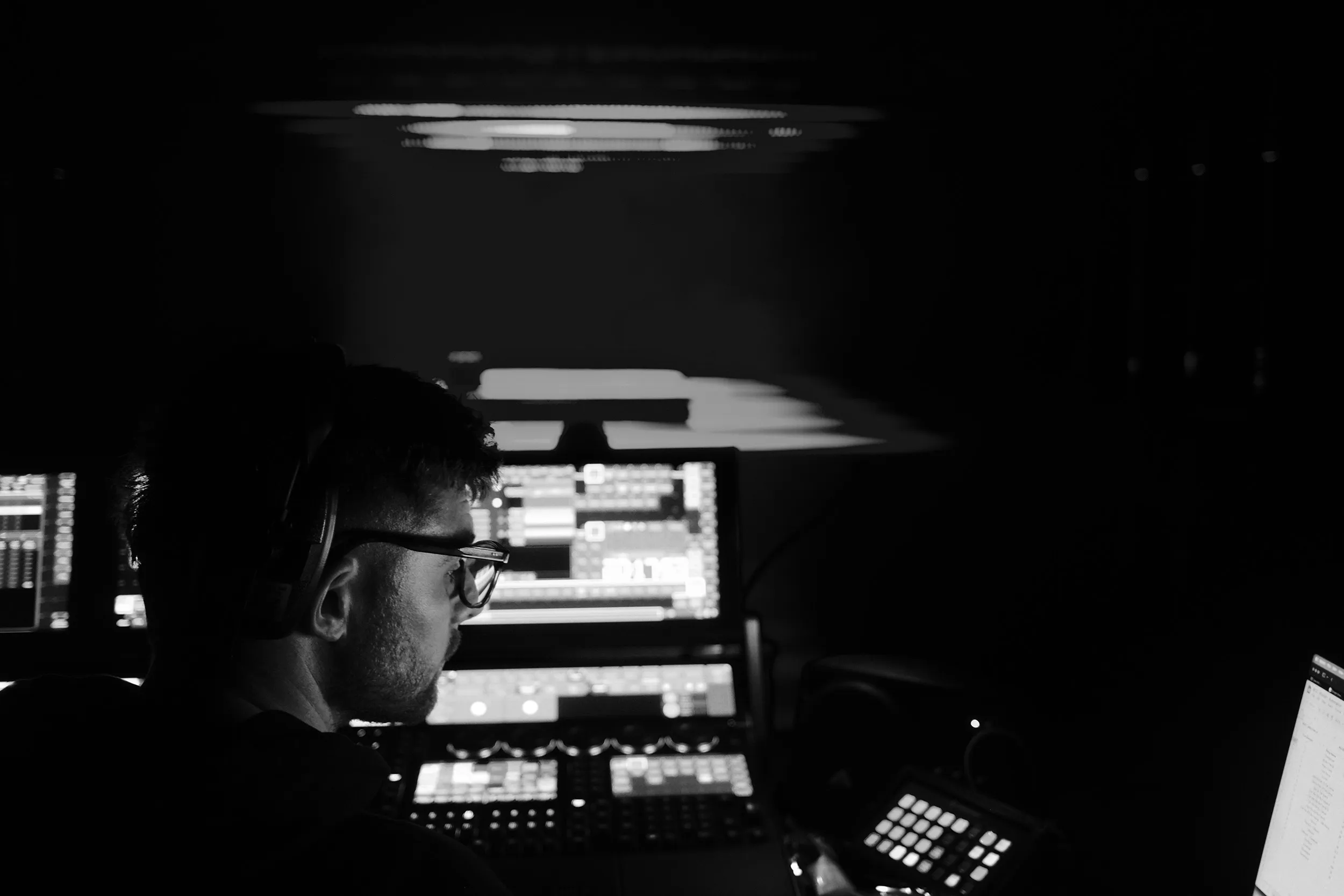
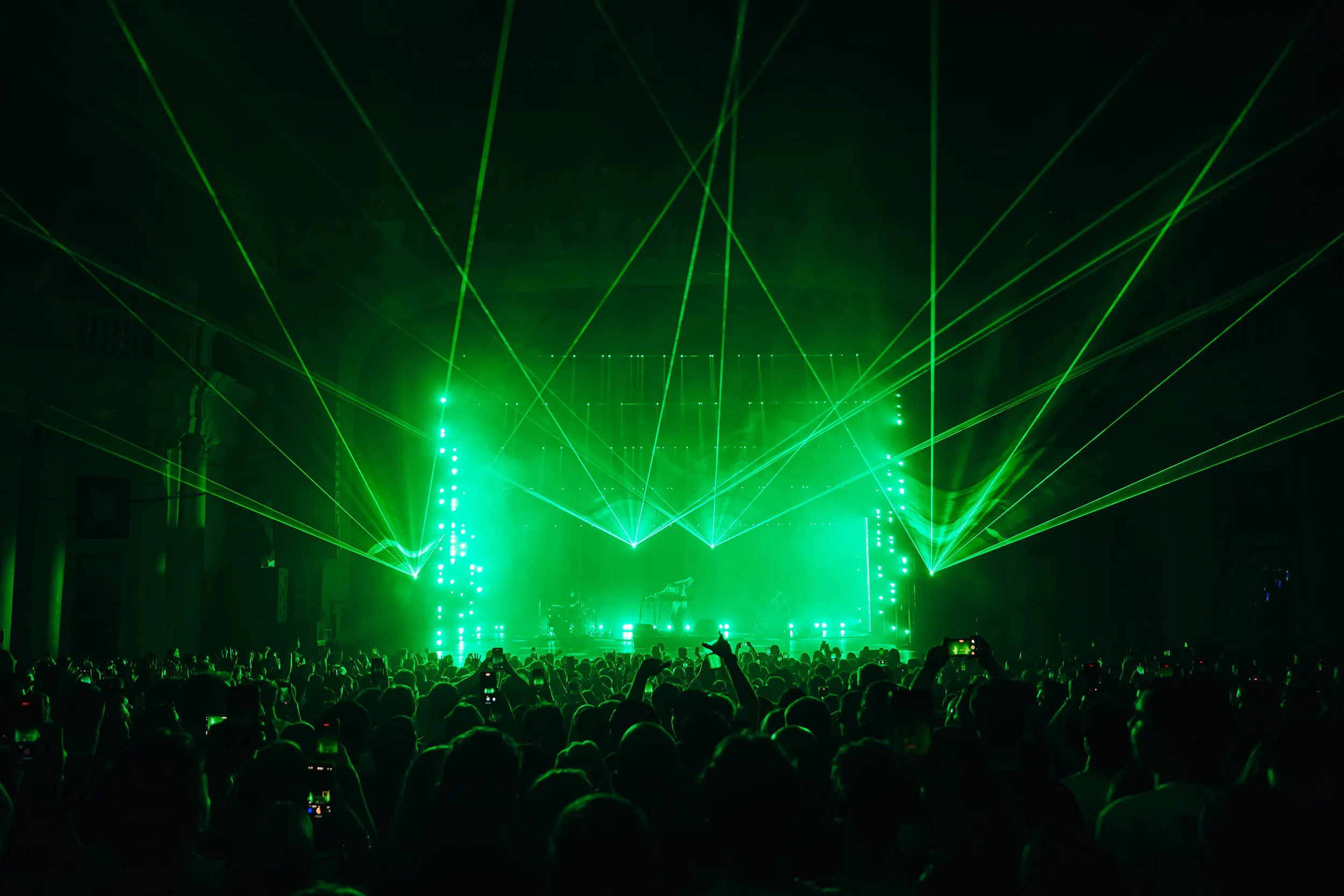
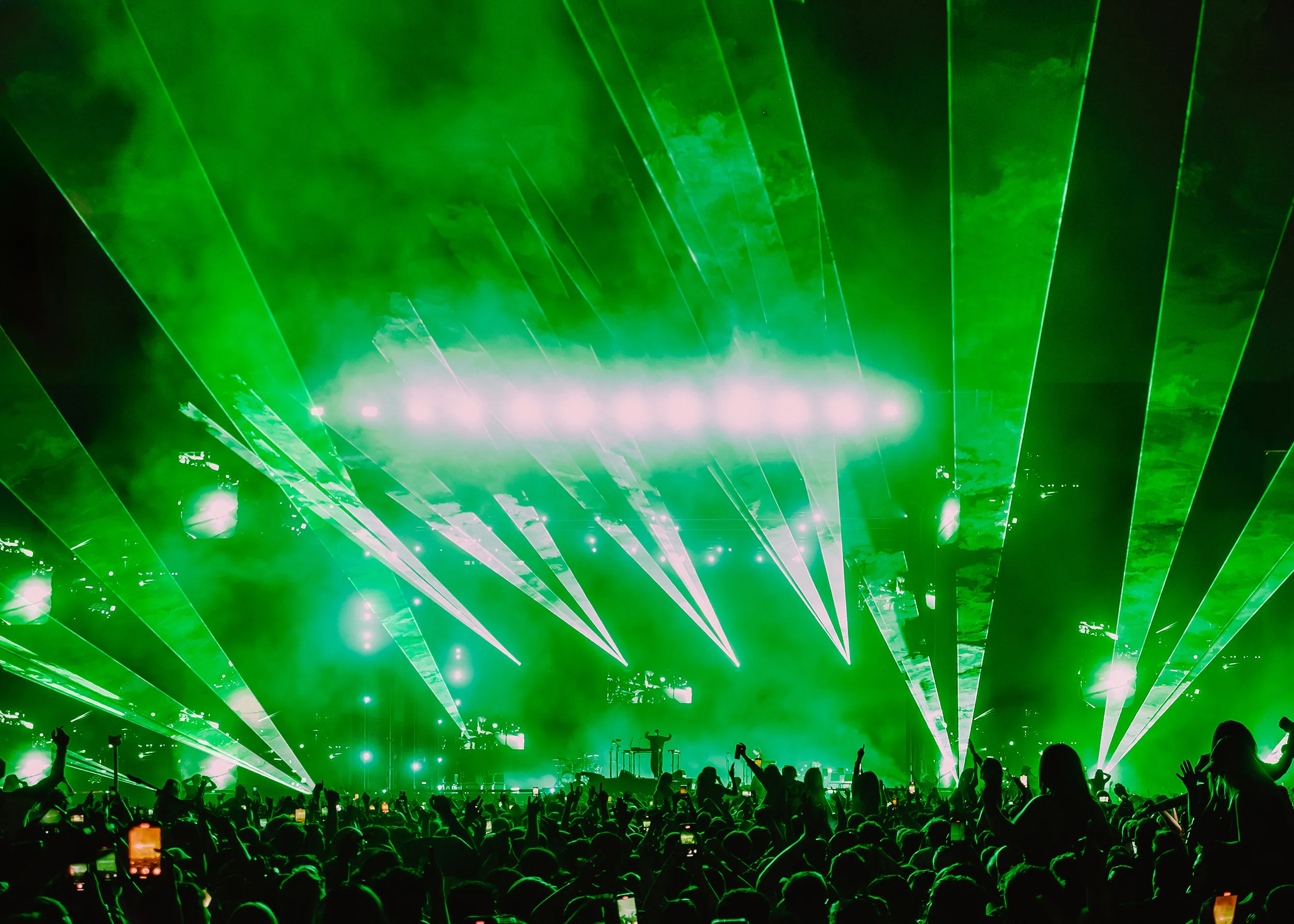
Programming a show like this involves bringing together all the different visual elements that make it up and working to sculpt them into an overall vision that feels connected. For this show this included lighting, visuals, and lasers.
production
With design, visuals, and production all under one roof, we were able to refine this 'simple box' concept, taking into consideration venue and touring limitations. This allowed us to craft a production that was not only imaginative and impactful but meticulously considered and fully functional.
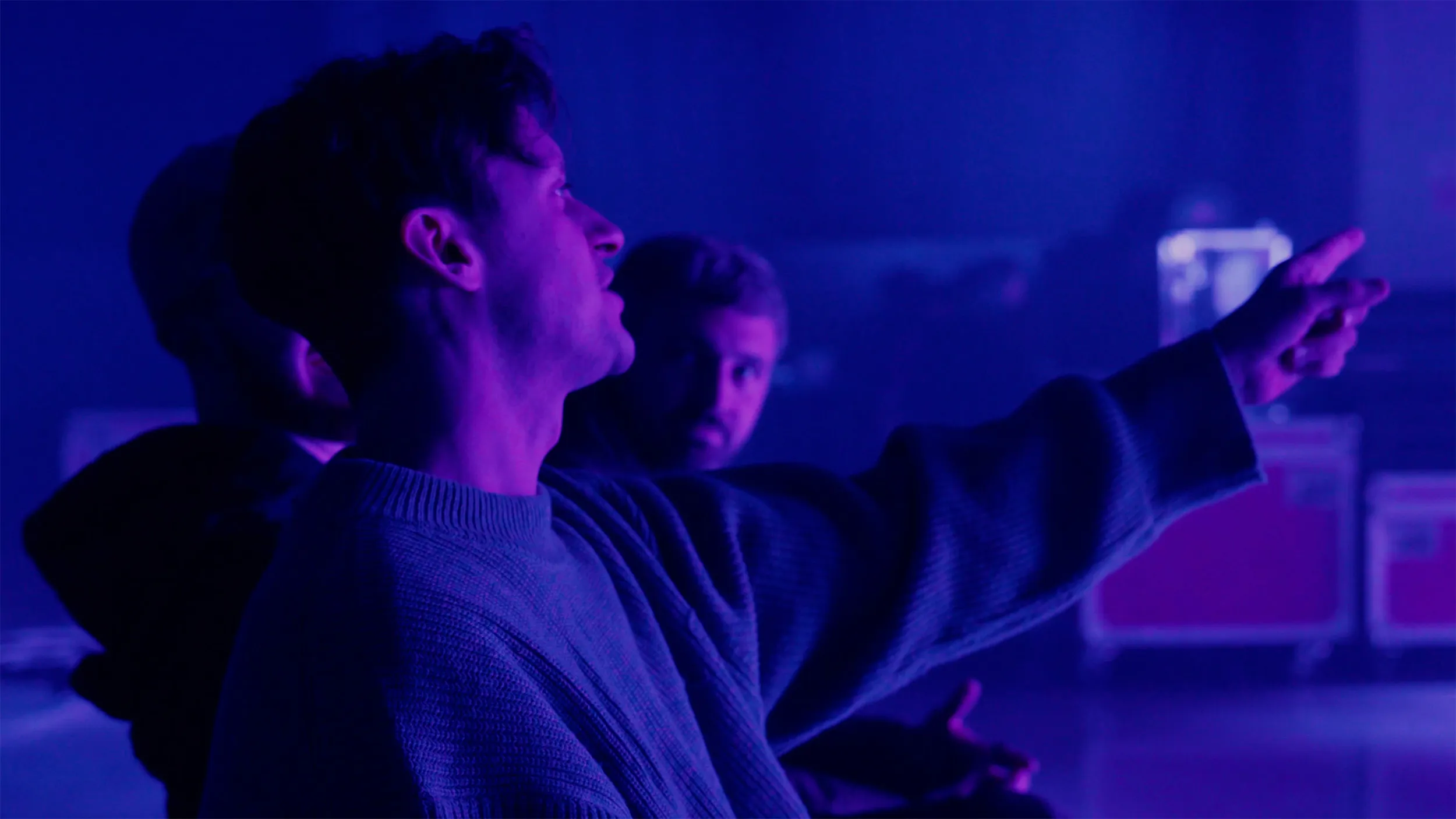
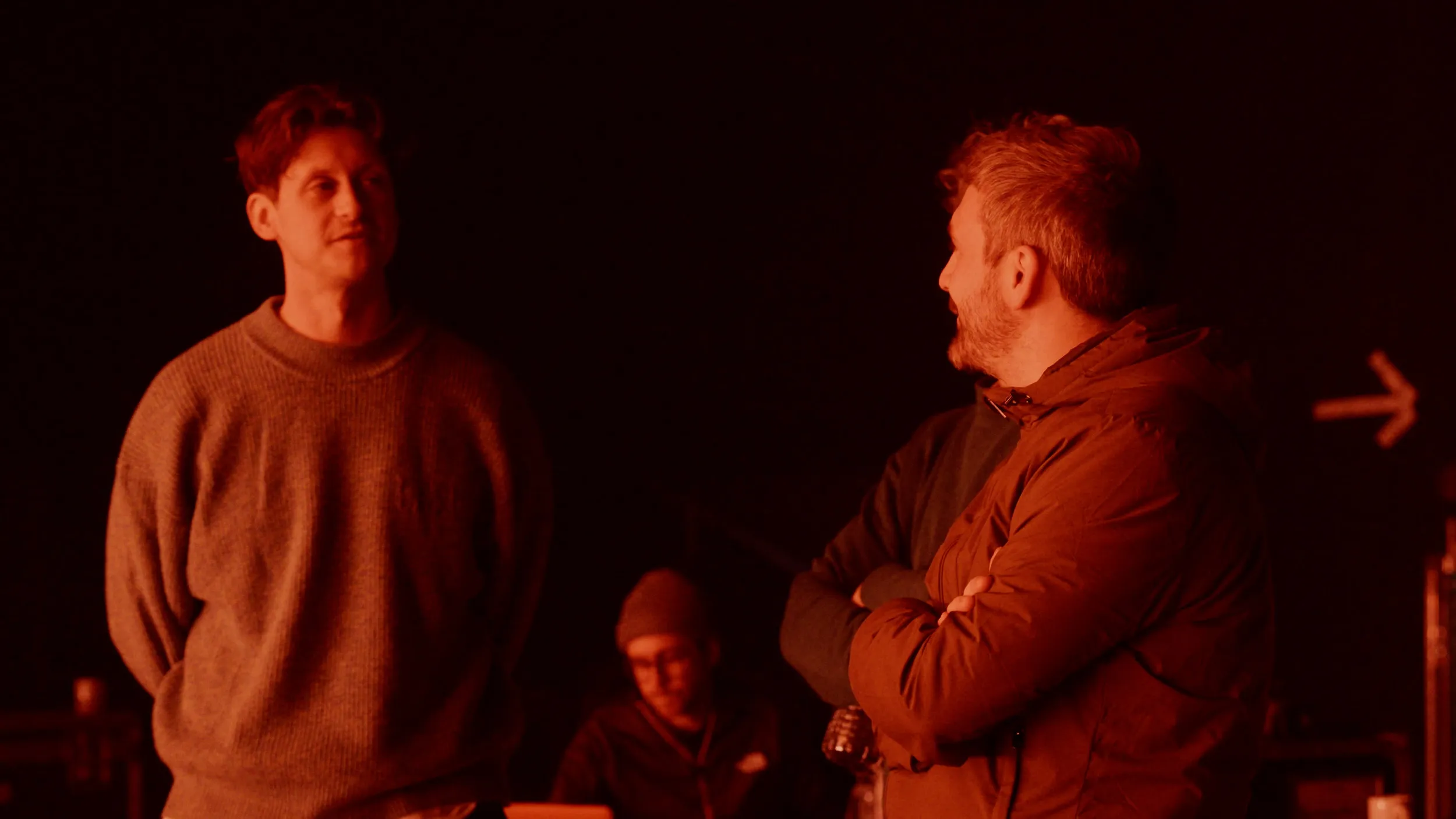
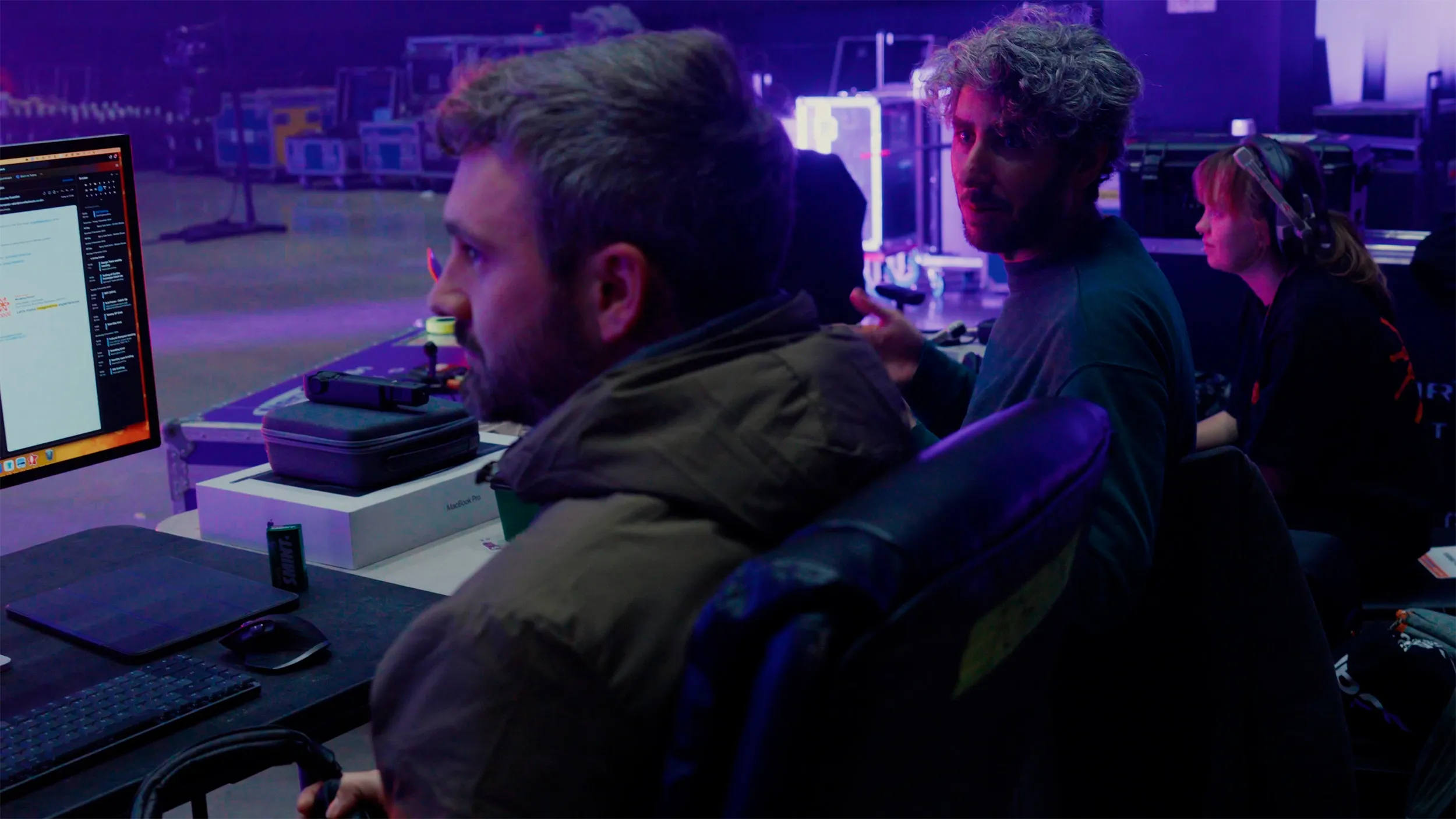
A show with this many moving parts required close collaboration with the band and Music Director Mike Lesirge. Choreographing the connection between performer and technology is a delicate, evolving process, and our priority is always to try to empower or protect an artist, depending on what they need to feel comfortable. It was incredibly important to find a way of staying flexible to changes that would come out of the rehearsals as the band worked on the performance.
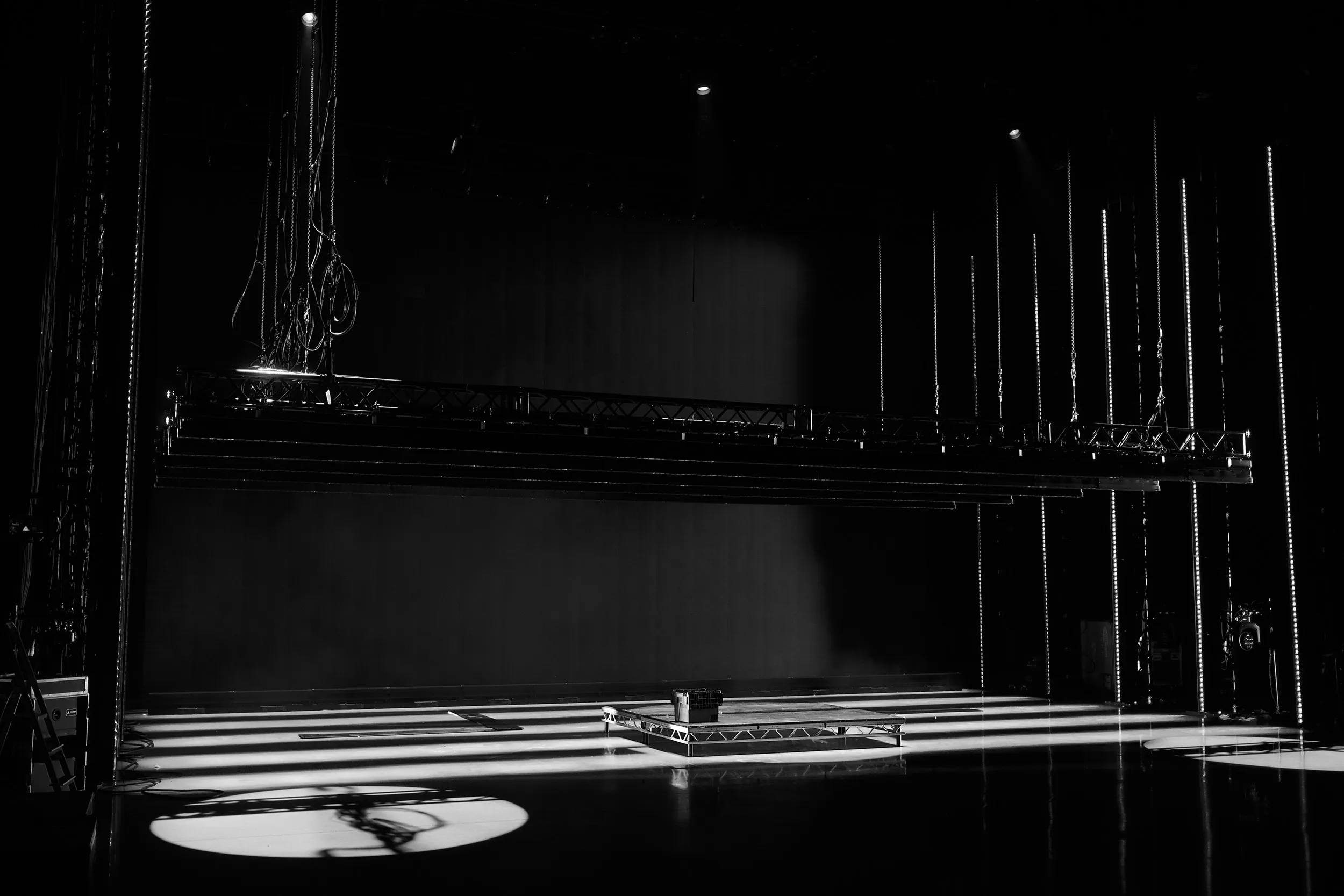
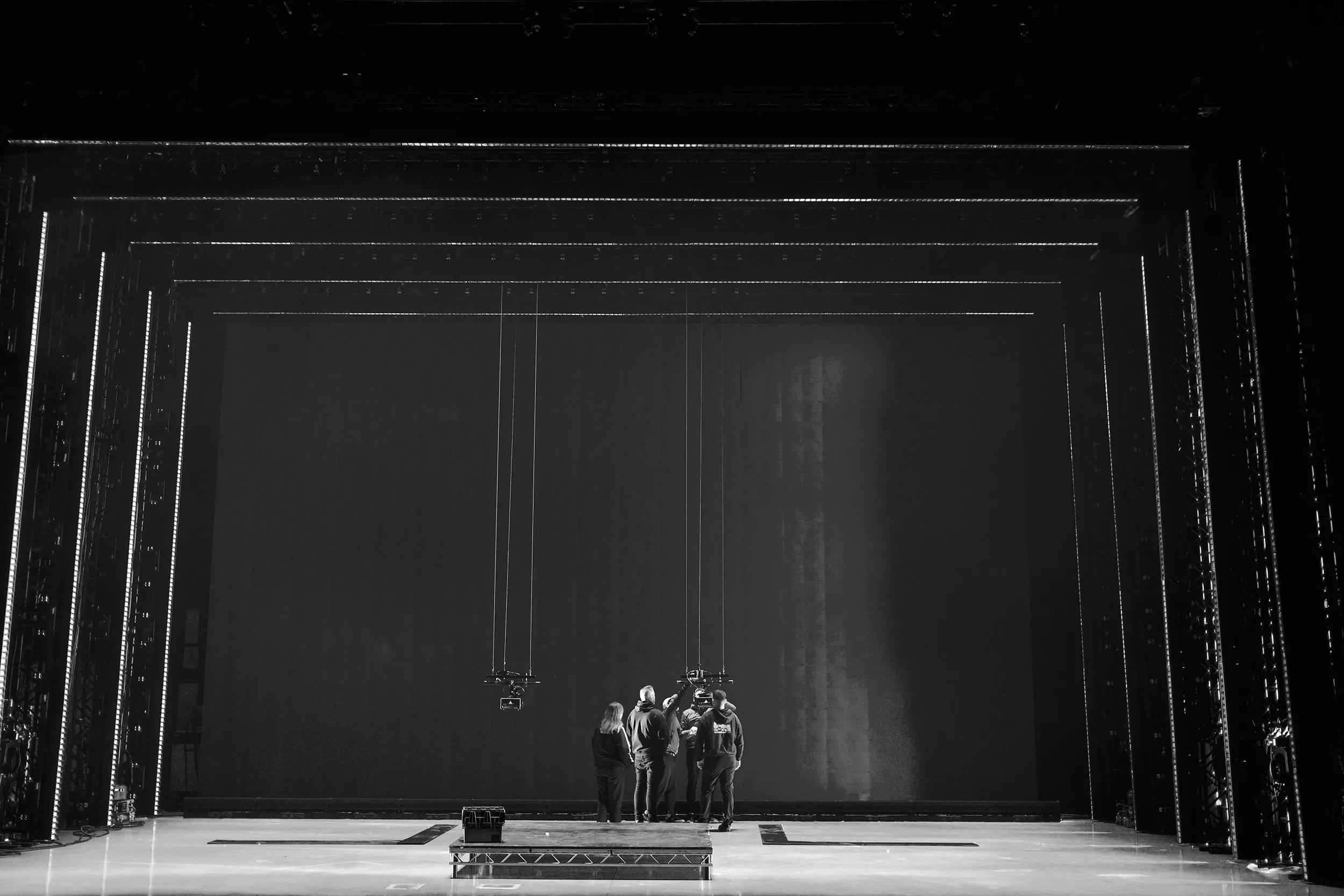
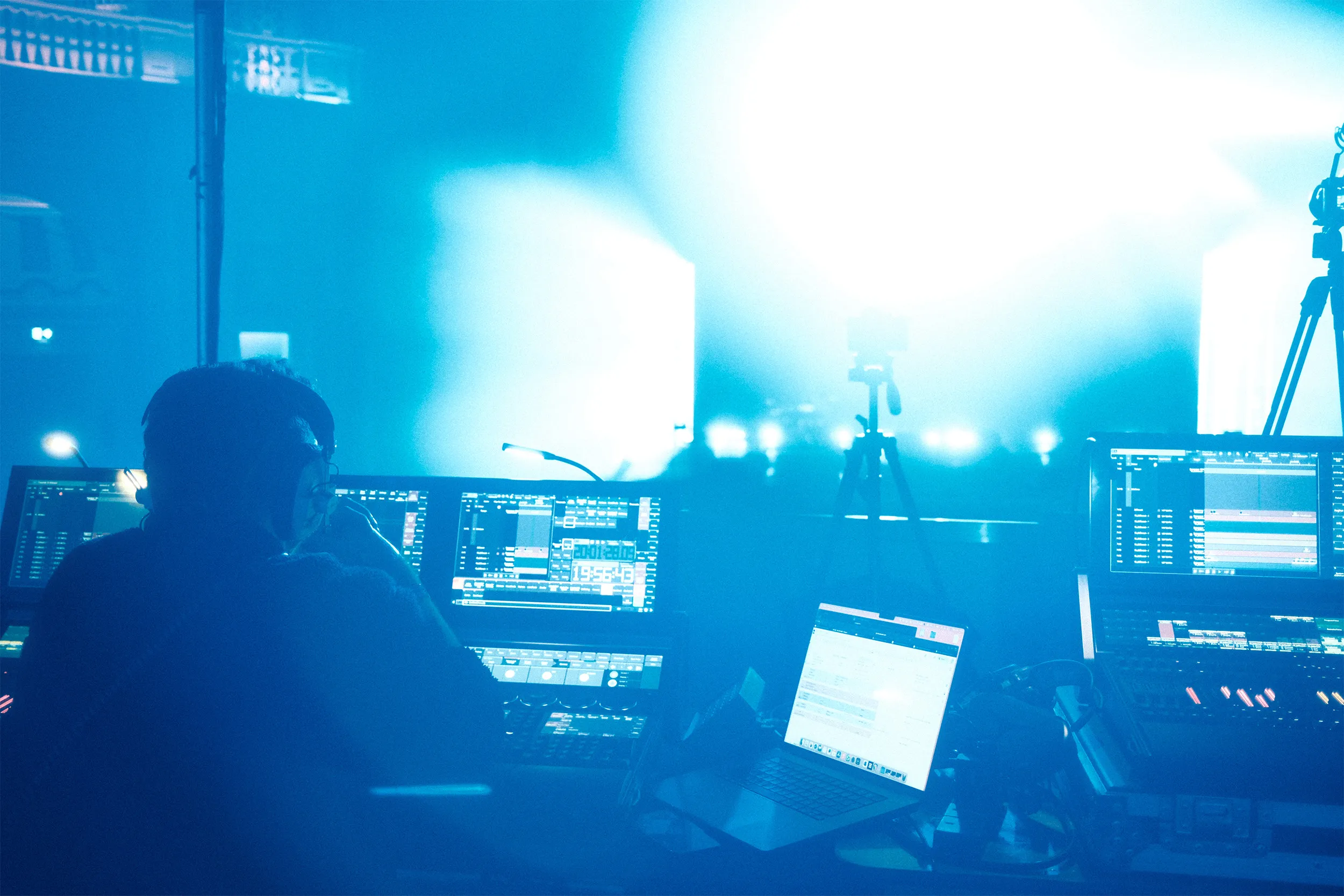
And one structural problem became clear – we needed to find a way of hiding parts of the screen when the lighting trusses changed position and blocked parts of the LED. If there was content on the screen behind the lowered trusses, it revealed all the cabling and metalwork that we prefer to keep hidden and was breaking the illusion of the set changes.
We built an interactive video effect which was applied to the visuals as they were triggered. This created a shape that would mask the content inside it and could be controlled from the lighting desk. As the lighting trusses moved from one position to another, the mask would move with them, keeping the screen hidden. It also meant we could control the position of the visuals themselves in realtime, so we could raise or lower the central point of any piece of visual content to match where the centre of the masked screen sat in each lighting state.
A fix made possible because design, visuals and lighting were all being solved in the same place.
gallery
Let's throw the kitchen sink at it.
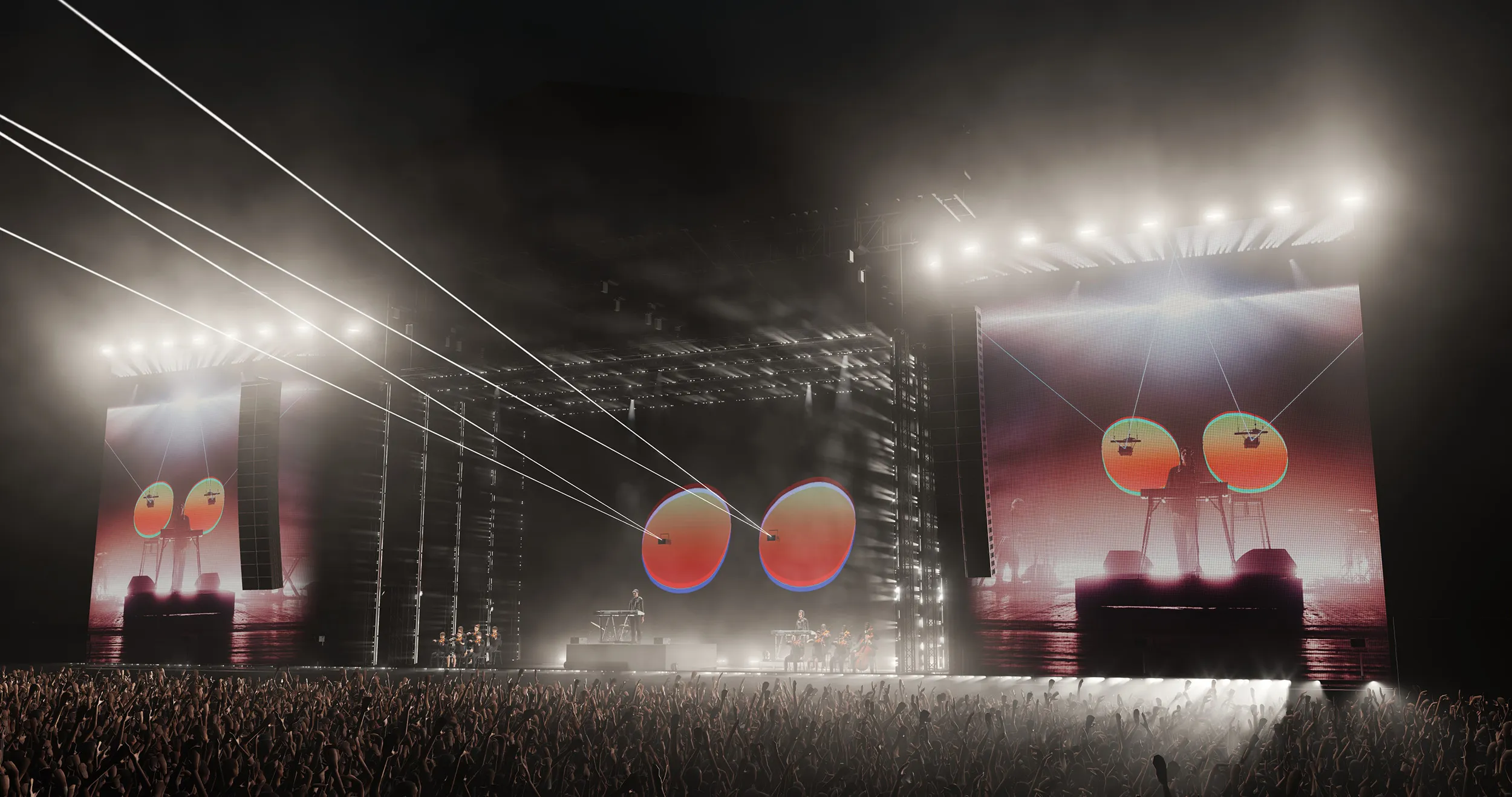
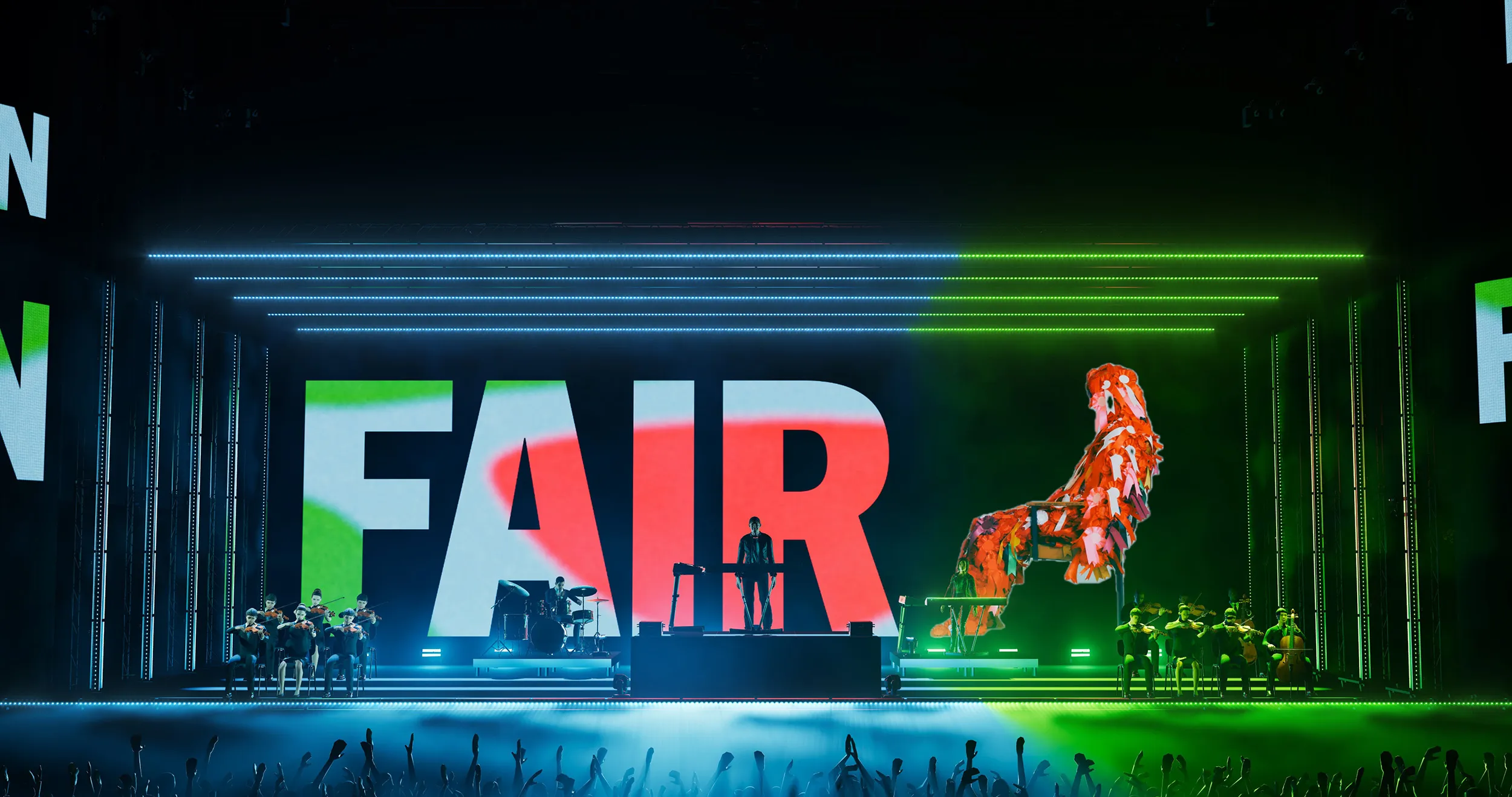
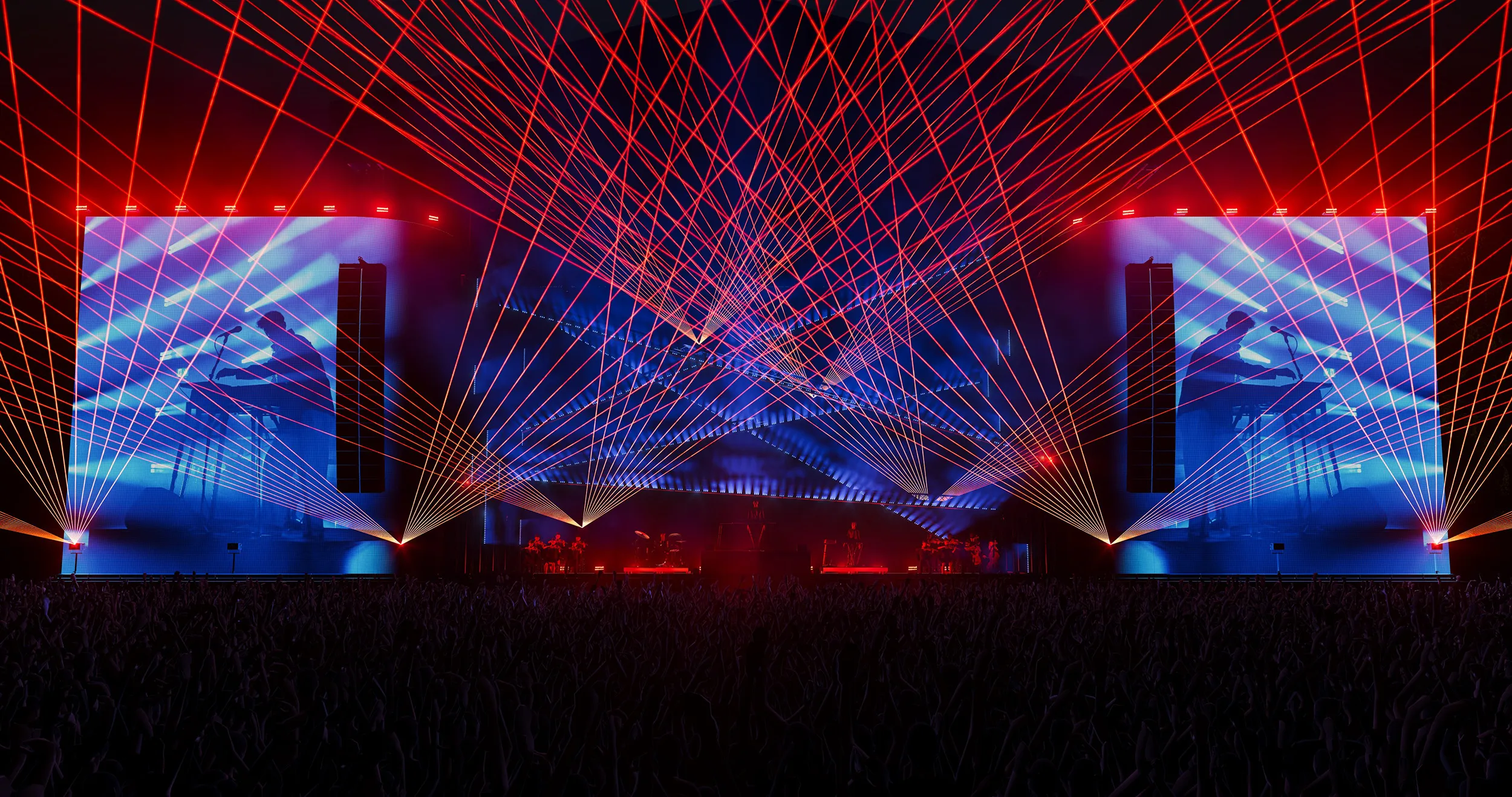
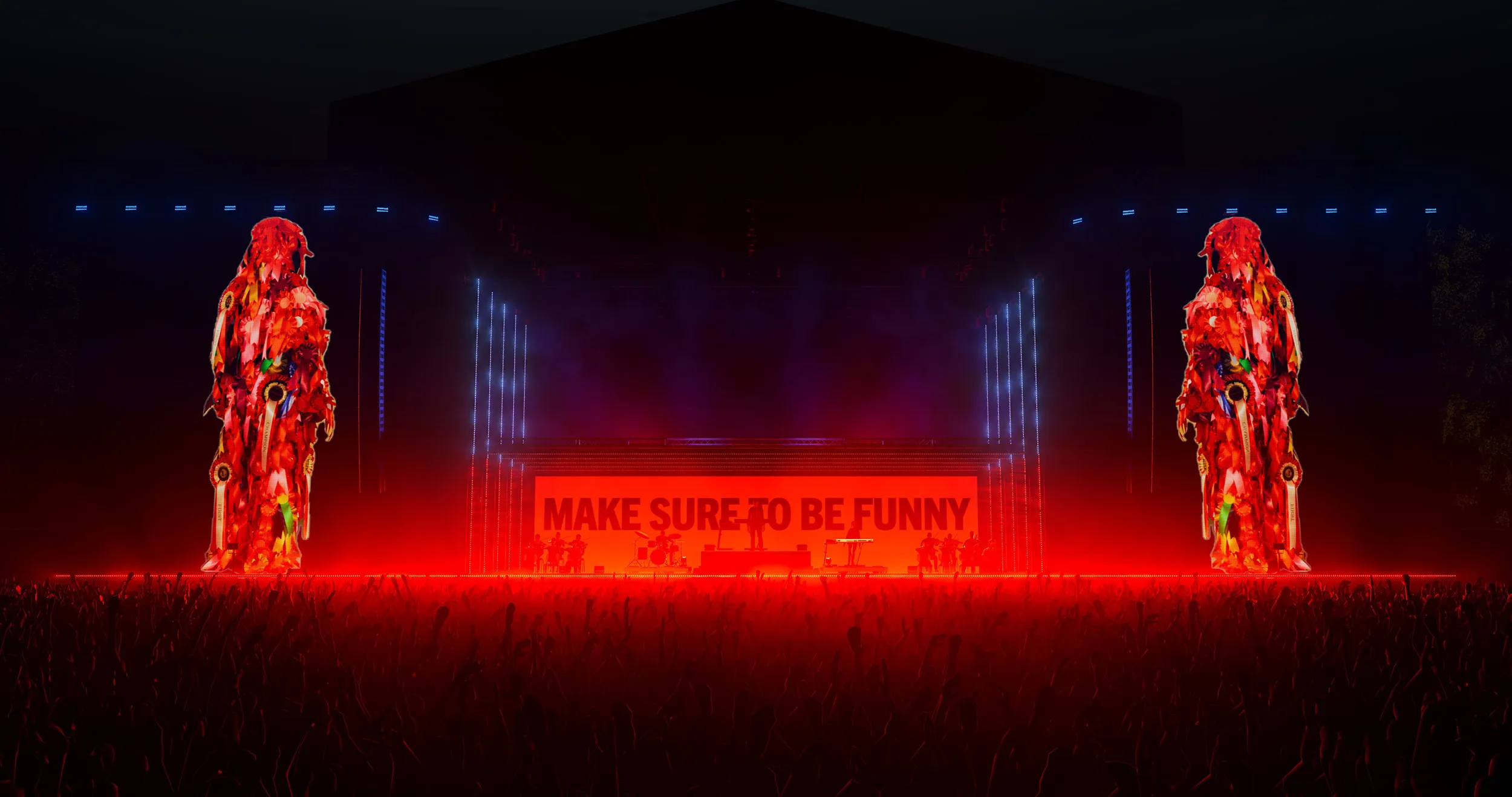
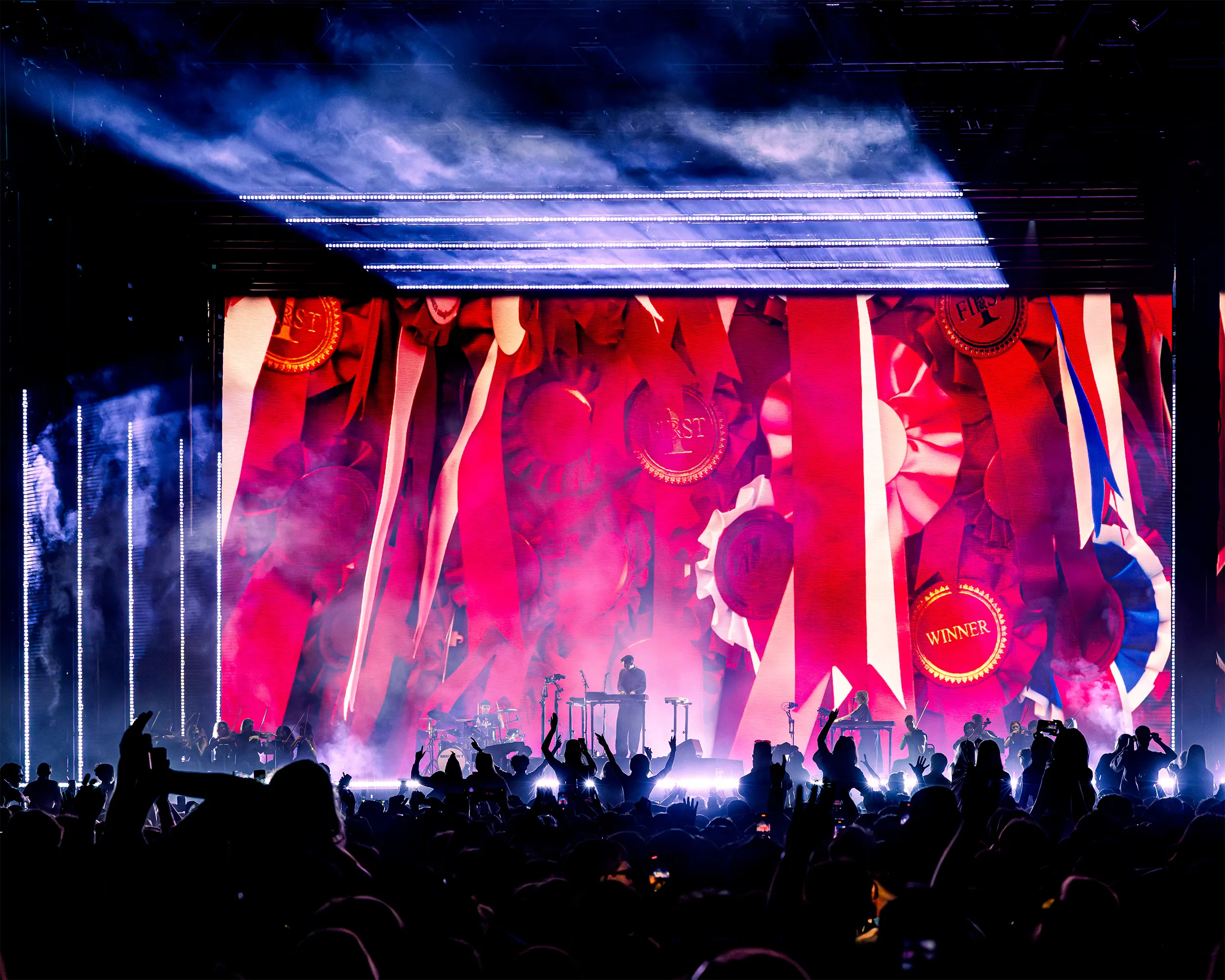
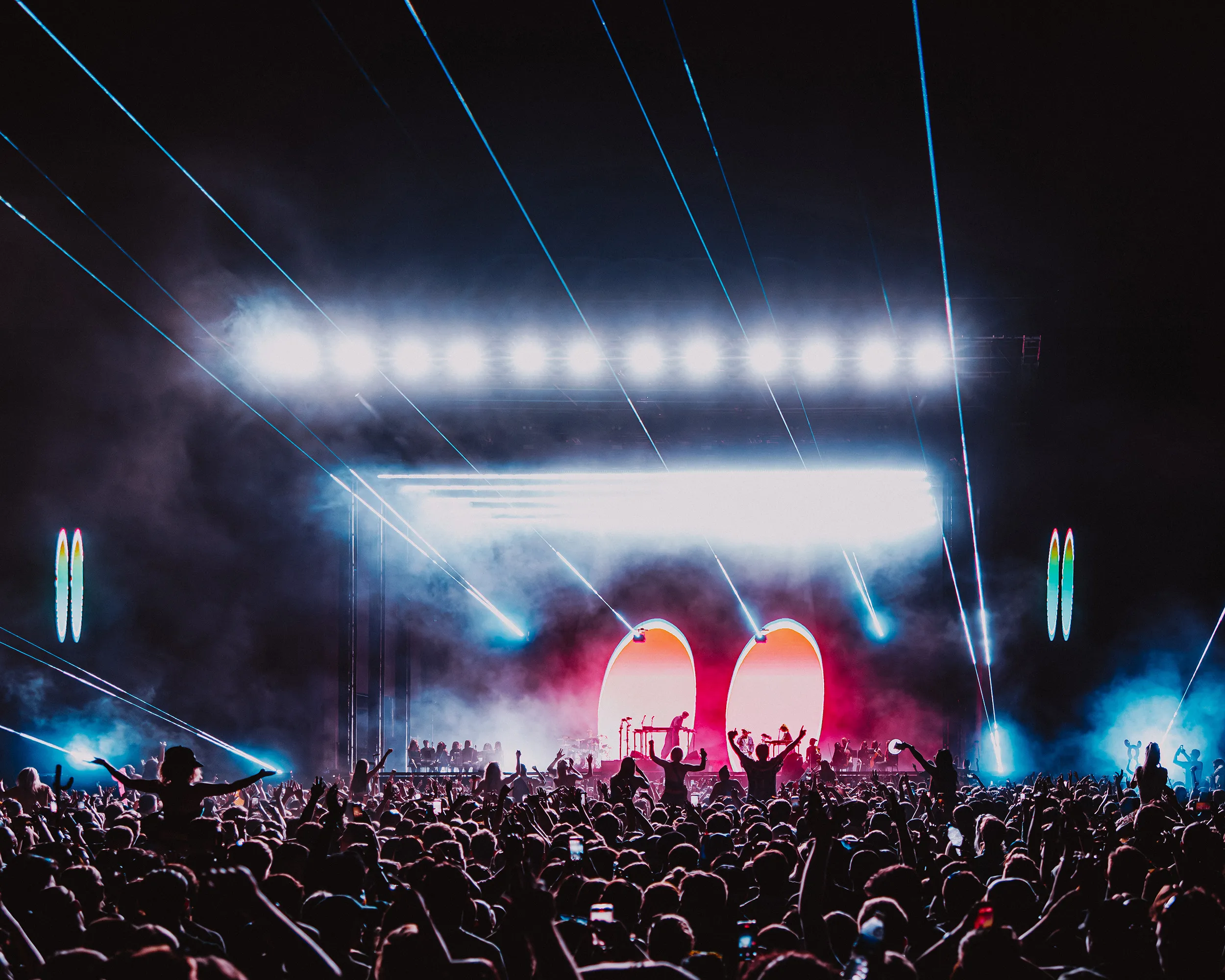
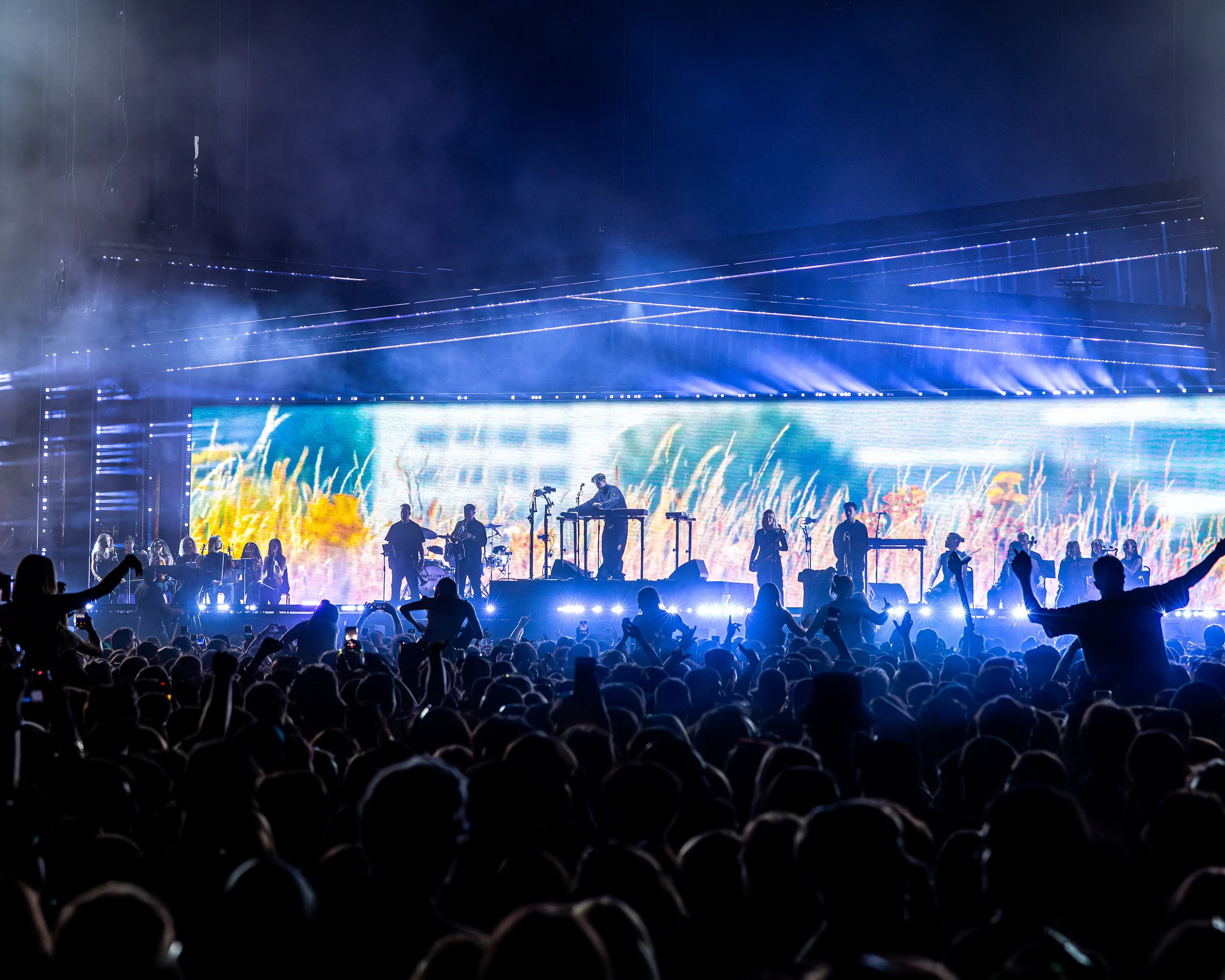
Brixton... but on steroids. We took all of the elements from Brixton and reimagined them on a larger scale, creating a holistic, integrated production that elevated the performance for Victoria Park.
Coinciding with the launch of his new album, Loner, we took the foundations of the live show and crafted it to fit the new setlist – this latest reimagining of the design was going to be bigger and better than ever.
production at scale
With a bigger and better design, comes a bigger and better production. With over 250 lights and 4,000 individual LEDs, our production team worked magic to bring the design to life, ensuring the energy and intimacy of the original show translated seamlessly to a festival environment.
Introducing Rosetti Man
With Loner came Rosetti Man. After a year of astronomical growth, Rosetti Man was introduced to launch the album – a full-body costume covered in rosettes. More than just a striking visual, it symbolises Barry Can't Swim's evolution over the past 12 months: the weight of fame, the polished exterior of success, and the invisible toll beneath it all. It's a powerful metaphor that fed directly into the new visuals for All Points East.
gallery
wrapping up
The Brixton Academy and All Points East shows demonstrate how a holistic approach, grounded in Strategic Imagination and meticulous execution, can transform an artist's vision into a fully realised live experience.
By integrating design, visuals, and production under one roof, we delivered a show that was creatively bold, meticulously considered, and deeply connected to the artist – a testament to the imagination, passion, and teamwork that was poured into it.
From an academy stage to a festival field – built to be lived, not watched.
made with zeal.